


Flow Labs has released Optimus Gen2, an AI-powered signal optimisation software that the Scottsdale, Arizona-based company says can reduce signal retiming work from months to minutes.
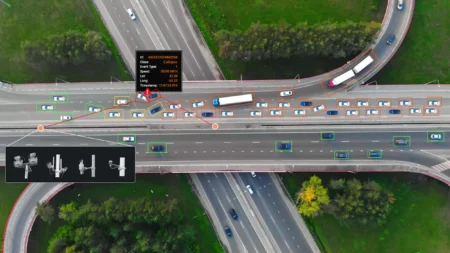
The commercial release, announced on 15 April, is built on Prometheus, a proprietary artificial intelligence (AI) engine developed by Flow Labs that uses transformer architecture to model signal performance across entire transportation networks. The engine learns from real-world vehicle behaviour at scale, analysing the relationships between intersections, corridors and driver movements.
Addressing the retiming backlog
Signal retiming is widely recognised as one of the most cost-effective tools available to transportation agencies for reducing congestion and improving safety. However, traditional retiming projects require large engineering teams, months of fieldwork and analysis, and high per-intersection costs. As a result, signals across the United States typically go three to five years or longer between retiming cycles, with timing decisions often based on a single day’s worth of data.

In the intervening years, traffic patterns shift, new developments generate demand, and signal performance degrades. Flow Labs says Optimus Gen2 changes the economics of this process by enabling agencies to optimise signals at a fraction of the traditional cost.
“Everything in traffic signal management comes down to making decisions. And the single biggest decision any agency has to make is what signal timings to run on their network,” says Jatish Patel, chief executive at Flow Labs. “We’ve led the way in giving engineers better visibility into how their signals are performing, but visibility alone isn’t enough.”
Comprehensive optimisation capabilities
The new release covers timing, coordination and safety optimisation, allowing engineers to define operational objectives and receive data-driven timing plans grounded in real-world traffic conditions. Optimus Gen2 also enables engineers to predict the performance impact of timing changes before implementation.
According to Patel, the platform replaces the uncertainty that has historically characterised retiming work. “Optimus Gen2 goes beyond analytics to give agencies the capability to act on what they see – to make better timing decisions, faster, and at dramatically lower cost,” he adds.
The Prometheus engine automates traffic modelling processes that previously required months of manual model building and calibration. Flow Labs says this produces outputs grounded in observed traffic behaviour rather than theoretical models.

Platform integration and deployment
Optimus Gen2 is available immediately as part of the Flow Platform, alongside the company’s signal performance monitoring, network-wide alerting, diagnostics, and before-after analysis tools. Flow Labs describes the combined offering as an end-to-end signal management platform covering identification, diagnosis, optimisation and benefits reporting.
The software is already in active use by agencies and engineering teams across the United States. Flow Labs works with state departments of transportation, metropolitan planning organisations, municipalities and engineering consultancies across the US and Canada, using high-penetration connected vehicle data to deliver analytics without requiring new field hardware.