

Finland and Estonia joined forces at the ITS European Congress in Istanbul this week as part of a broader Nordic-Baltic push to open new export markets in Turkey’s fast-developing intelligent transport sector.
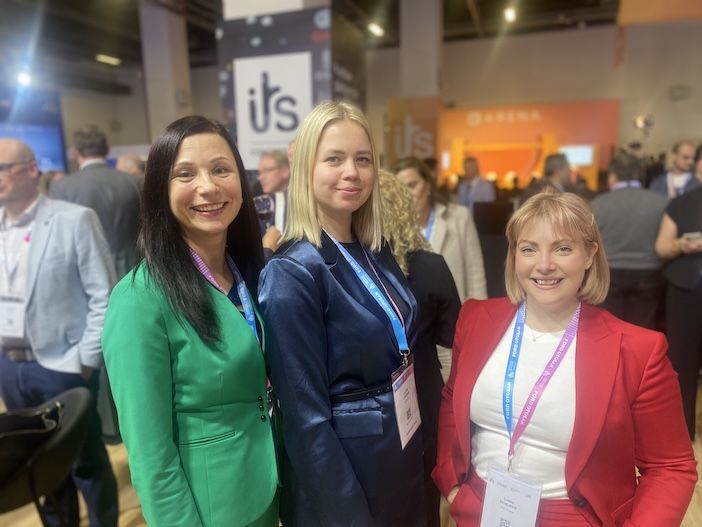
Sanni Remonen, export manager of ITS Finland, and Maarja Rannama, vice chair of ITS Estonia, were among the delegates attending the congress — held in Istanbul from 27–29 April — alongside Eleen Lindmaa, head of the ITS Estonia network, and representatives from the private sector, public bodies and research organisations drawn from across the Nordic and Baltic region, including the Ambassadors of Finland and Estonia to Turkey, Pirkko Hämäläinen and Väino Reinart, respectively.
“Turkey is a really big export market,” said Remonen. “They have massive developments in transportation and mobility — both the infrastructure and the digitalization of it. Coming from the Nordics, both Finland and Estonia, we have very advanced technologies already in place in our countries. But to come to such a big market as Turkey, we have to find ways to combine and be present as bigger delegations, rather than as small entities providing niche solutions.”
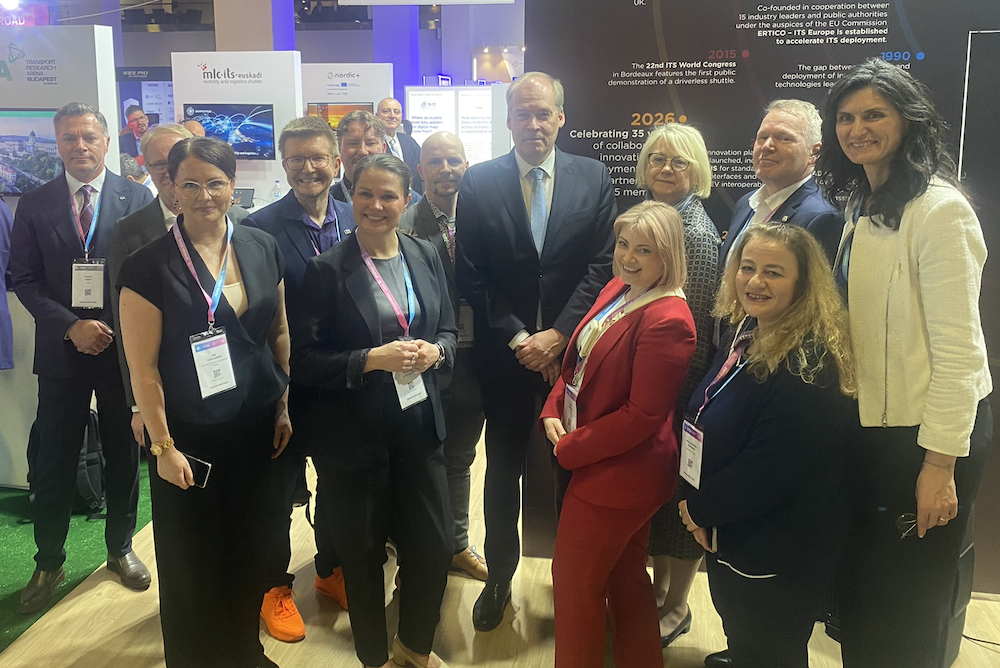
Rannama echoed that view, stressing the importance of a cross-sectoral approach. “This is a cross-border delegation, but also cross-sectoral — we have public sector, we have private companies, we have research organisations. That triangle is very interesting and very important to have together.”
Turkey is a designated target market under a joint three-year export project involving Finland, Sweden and Estonia. The delegation’s presence in Istanbul was no coincidence: the congress provided an opportunity to convene a broader Nordic meeting with the Estonian ambassador, focused on building the relationships that underpin long-term market entry.
Lindmaa confirmed that the ambassador would be joining delegates for a dedicated meeting. “We are having a meeting afterwards where there are all the companies here from the Nordic and Baltic countries and our ambassador will be there,” she said.
“Creating the ground for building trust between entities — between public and private, between cross-border — is something that takes time, but we have worked for years already on that,” said Rannama. “Business is between people, not between organisations. So it is extremely important that we bring this network together constantly, at every congress, every event.”
For Finnish companies in particular, Turkey represents relatively new terrain in the mobility space. “For Finland, Turkey is not the biggest export market, and what exports we do have tend to be in other industries,” Remonen acknowledged. “So this is definitely a new area of interest for us.”
Both delegates were clear that cluster-based collaboration is essential for smaller companies looking to break into the market. “Turkey is a market with big potential, but it is not very easy to enter when you are a small SME on your own,” said Rannama. “You need this kind of collaboration — to do it together. That is the main reason the public sector is here: to support SMEs, to support the companies.”
The delegation’s activities in Istanbul included a reception and the planned meeting with Nordic and Baltic companies attending the congress, at which the Estonian ambassador Väino Reinart was expected to speak.