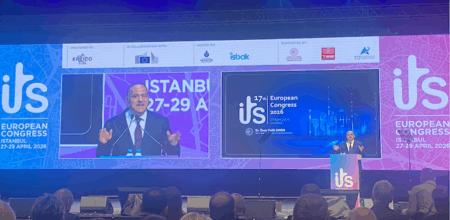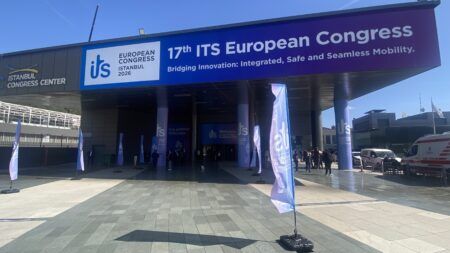


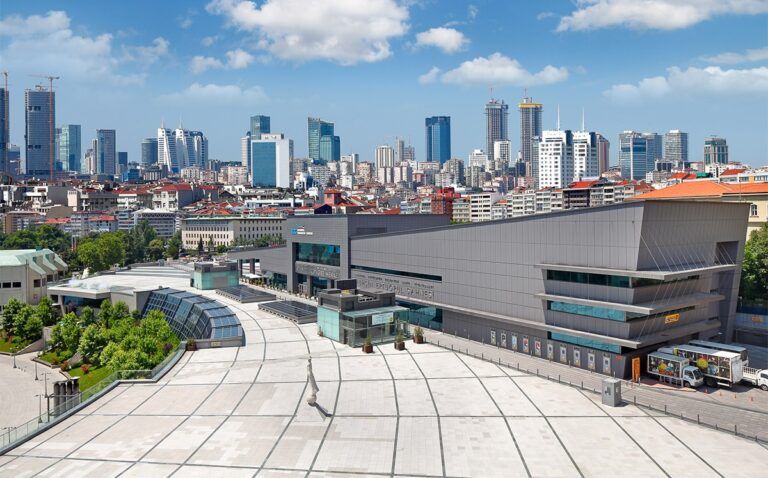
Istanbul has become a reference point for integrated urban mobility as the ITS European Congress opens in the city today, bringing together transport authorities, technology providers, and researchers to address the barriers preventing cities from scaling mobility systems beyond the pilot phase.
The congress arrives as a series of preparatory discussions — including a recent ERTICO webinar titled ‘From Pilot to Scale: Deploying Integrated Mobility Systems’ — have highlighted Istanbul’s operational approach as a working model for cities still navigating the transition from experimentation to system-wide deployment.
A city shaped by geography
Istanbul’s position bridging two continents creates structural pressure that most cities do not face. “There is a central gravity in terms of linking the Asian side with the European side,” says Joost Vantomme, chief executive of ERTICO. That pressure, speakers at the webinar argued, has driven a level of integration that remains aspirational for many European cities.
Nearly 45% of motorised trips in Istanbul are made via public transport. Metro, ferry, bus, and rail services are increasingly managed as a single continuous network rather than a collection of separate modes, with micro-mobility integrated into the wider system and pedestrian-first redesigns reshaping key historic districts.
“We are designing the roads and the historic old town of the city to be more pedestrian-friendly, or to only allow pedestrians,” says Pelin Alpkökin, deputy secretary general at Istanbul Metropolitan Municipality (IMM).

Integration as operational requirement
For Erdem Samut, chief executive of iSBAK — the technology subsidiary of IMM — the significance of Istanbul’s approach goes beyond transport efficiency. “The impact of smart mobility is not just about technology; it is about improving the quality of life in a very tangible way,” he says.
That integration is underpinned by a long-term strategic agenda connecting sustainability, inclusion, and system efficiency. Barbaros Büyüksağnak, head of the foreign relations department at IMM, says the municipality is working to “make Istanbul a greener, smarter, and more inclusive city by developing sustainable urban mobility plans and green action plans” — a framework in which decarbonisation, congestion reduction, accessibility, and multimodal integration are treated as interdependent outcomes rather than separate policy tracks.
Why scaling fails elsewhere
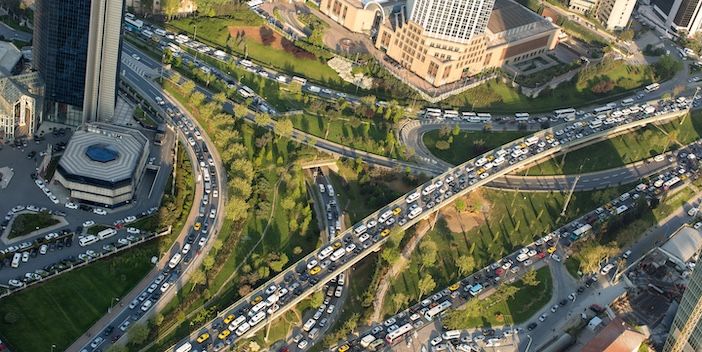
A consistent finding across the webinar discussions was that the difficulty of scaling mobility systems is not primarily a technology problem. The tools, platforms, and data required largely exist. The challenge is institutional: aligning fragmented governance structures, procurement models, and operational responsibilities that were not designed to function as a single system.
Pilot projects tend to succeed because they operate within controlled environments with limited stakeholders and defined boundaries. Scaling removes those conditions simultaneously, exposing the misalignments that pilots were never required to resolve.
The congress as working environment
Delegates at the ITS European Congress will confront precisely these barriers across the week’s programme — governance fragmentation, system interoperability, procurement constraints, and long-term operational sustainability among them.
The event’s hosts have framed its purpose not as a showcase of innovation, but as a working environment where the question shifts from what is technically possible to what can be implemented and sustained at scale across different governance models and political environments.
Istanbul, as the host city, offers a live case study. Integration there is described not as a project that has been completed, but as a continuous operational condition — maintained through governance alignment, system interoperability, and long-term discipline rather than achieved through any single breakthrough.