

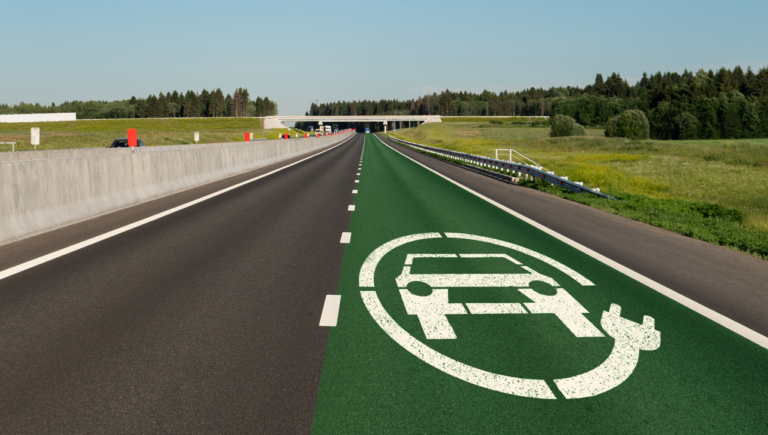
Dynamic in-motion wireless charging may help address gaps in EV charging infrastructure by moving power delivery into the transport corridor, according to analysis from GlobalData.
The research and analytics company points to a magnetic coupling wireless power transfer (WPT) road system co-developed by Honda R&D, Taisei Corporation and Taisei Rotec. Initial demonstration tests of the system are slated for 2027. The release does not say where the tests will take place.
Constraints on EV adoption
GlobalData says growth in key EV markets is constrained by charging infrastructure gaps, grid capacity limits and consumer concerns about battery range and charging times. Automakers and infrastructure operators face pressure to deliver scalable solutions that reduce the time vehicles spend stationary at plug-in charging points.
By continuously transmitting power to vehicles while they are moving, dynamic WPT avoids the reliability and downtime issues associated with public chargers, according to the company. It adds that, if commercialised effectively, in-motion charging infrastructure could ease range anxiety, reduce queueing at chargers and cut the physical battery capacity needed in each vehicle, which would lower production costs and purchase prices.
“From Honda’s strategic perspective, integrating dynamic charging technology creates long-term operational leverage across both commercial logistics and mass-market passenger vehicles,” said Madhuchhanda Palit, senior automotive analyst at GlobalData. “While deploying WPT in heavy transit corridors and logistics fleets offers immediate commercial utility, its eventual expansion into passenger segments will allow automakers to downsize onboard battery packs without sacrificing operational range.”
GlobalData notes that establishing foundational intellectual property in vehicle-to-infrastructure power transfer gives Honda an engineering advantage, while competitors remain tied to stationary fast-charging partnerships.
Palit added: “For prospective EV buyers who lack access to dedicated residential overnight charging, widespread dynamic charging may potentially provide the predictability needed to encourage the mainstream transition from internal combustion engines.”
What the 2027 trial must prove
“Dynamic in-motion charging represents a structural shift from standalone charging stations toward integrated energy-transport infrastructure,” Palit continued. “While the technological trial scheduled for 2027 must first prove cost-effectiveness, grid stability, and road-surface durability under continuous traffic load, successful deployment could accelerate EV market penetration by eliminating stationary charging bottlenecks and redefining the economics of EV battery sizing.”