

A groundbreaking national study has demonstrated how connected vehicle technology and AI could revolutionize Australia’s transport management, delivering safer roads, reduced congestion, and lower emissions.
The collaborative research, led by ITS Australia and the University of Melbourne with support from the iMOVE Cooperative Research Centre, involved multiple state transport departments including Queensland, New South Wales, Victoria, and Western Australia, alongside the Transport Accident Commission.
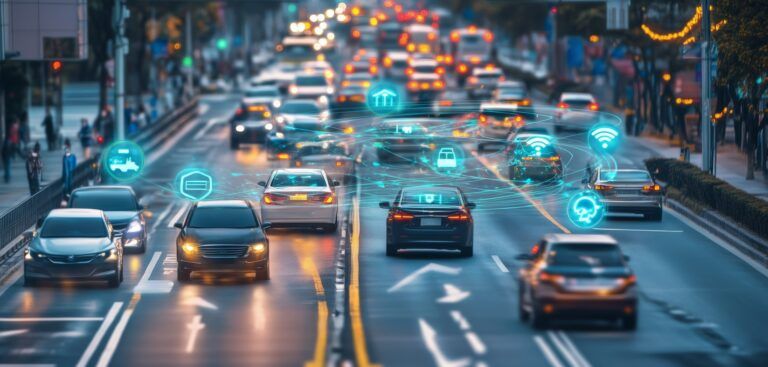
The study examined how real-time data from connected vehicles and bicycles, combined with traditional traffic monitoring and advanced AI modeling, can predict road conflicts, optimize traffic signal timing, and improve safety for vulnerable road users.
Results showed AI models using connected vehicle data significantly reduced delays and congestion at intersections. Cyclist data from specialized sensors identified crash risk hotspots and surface issues affecting bike riders, while vehicle trajectory analysis provided more accurate emissions estimates than traditional methods.
Most notably, researchers developed a dynamic dashboard that enables transport professionals to visualize traffic performance using just 2% sample data, demonstrating the efficiency of modern data analytics.
“This is a landmark project for Australia’s transport sector,” said Silje Troseth, president of ITS Australia. “The findings prove that connected data can deliver real-time insights that help traffic managers make safer, smarter and more sustainable decisions.”
The research highlighted the benefits of traffic smoothing and electric vehicle adoption in reducing emissions, while proving that integrated data systems can prepare Australia for an increasingly connected and automated transport future.
ITS Australia and the University of Melbourne are now seeking partners to trial the project’s tools, including AI-based conflict detection systems, dynamic emissions mapping, and multimodal signal optimization technologies.
Read the full Integrated Connected Data for Safer, More Efficient Transport Management report here.