

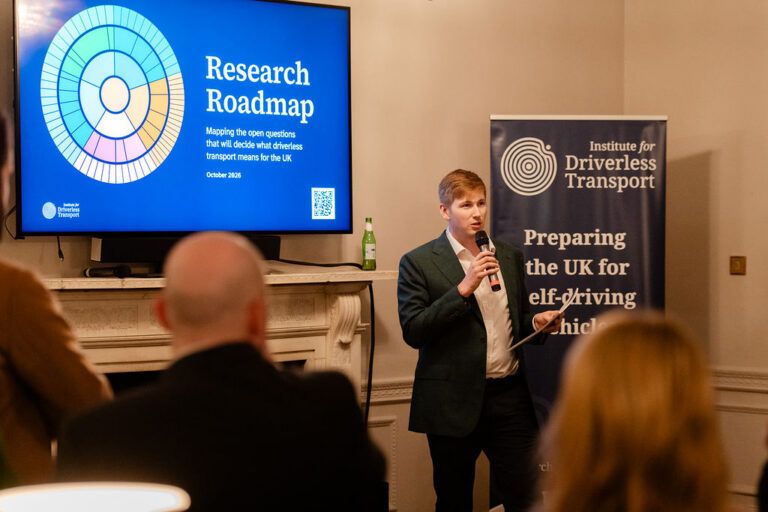
The Institute for Driverless Transport (IfDT), an independent UK research body, has published a Research Roadmap setting out 65 open questions about how driverless vehicles could affect the country, covering economics, jobs, society and security.
The document is free to explore at www.ifdt.co.uk/research-roadmap, where the full roadmap can also be downloaded as a PDF. It contains 65 questions grouped into 23 themes across five areas: economics and productivity; social change; job displacement; security and geopolitics; and speed of rollout.
IfDT launched the roadmap at PUBLIC Hall on Horse Guards Avenue in Westminster on the evening of Wednesday 28 October 2026. The institute says each question was chosen because it remains unanswered yet is critical to shaping policy, business and investment decisions.

Autonomous rides begin in London
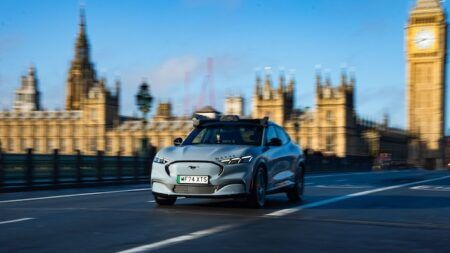
The publication coincides with the start of supervised autonomous services in the UK capital. According to IfDT, Wayve and Uber began the country’s first publicly available autonomous rides in London on 3 September 2026, with a licensed safety driver in each vehicle. Waymo and Baidu are preparing services in London, while Uber, Pony.ai and Verne have begun testing in Manchester.
The roadmap argues that the best moment to shape what follows is while services and markets are still forming. IfDT says answering the questions is critical to the strategies now being drawn up, from long-term infrastructure plans for local areas to planning for skills as artificial intelligence changes the labour market.

Questions posed
The roadmap opens with a question about cost: “How quickly are AV costs likely to fall, and when could they become cheaper than existing transport?” AV stands for autonomous vehicle.
Other questions include:
- “To what extent does professional driving form part of the UK’s employment safety net and how will this function be recreated if demand for professional drivers is significantly reduced?”
- “Will Britain become dependent on AV services for any key activities and what fallback options will exist if a supplier fails or withdraws?”
The final question asks: “Which are the key public bodies that should already be anticipating the impact of AVs on their own work and who within those organisations should lead a response?”
Six months of engagement
The roadmap draws on six months of engagement with the operators bringing AVs to London and the regulators shaping their policy environment. IfDT also interviewed academics, logistics businesses, unions, local authorities, security specialists and civil society organisations, and says it held more than 30 conversations with councils, operators, industry, unions, charities, insurers, lawyers and universities. Taking part does not mean endorsing the roadmap.
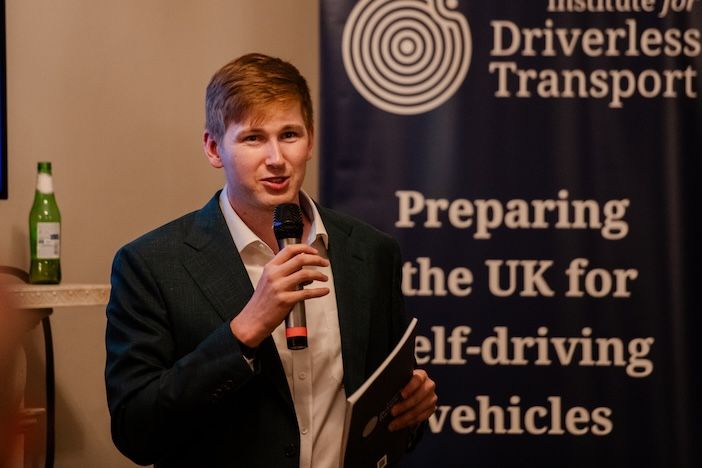
“What struck us most in the interviews was how far this reaches: into jobs, public services, the built environment and national resilience,” says James Hutt, co-founder of the Institute for Driverless Transport. “The people who know those areas best are rarely part of the conversation about AVs yet.”
Many of the questions are aimed at people who may never have thought of AVs as part of their job, but whose decisions will help shape what happens.
Next steps
The institute is now seeking funders and places to test the research.
“Our next step is to bring funding and researchers together with the businesses and public bodies that need answers,” Hutt adds. “If you can fund research or offer a place to test it, we would like to hear from you.”
IfDT describes itself as an independent UK research and convening body focused on the consequences of autonomous vehicles. It publishes both open-access and commissioned research and says it has no commercial interest in any particular technology, operator or outcome. More information is available at www.ifdt.co.uk.