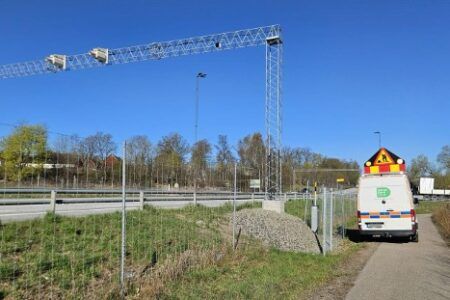


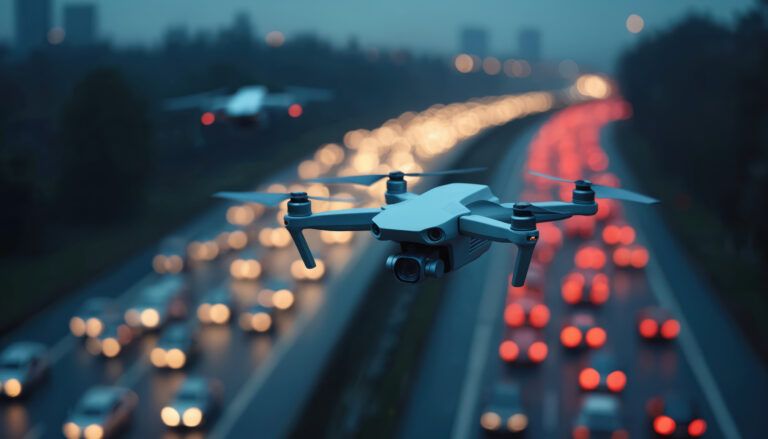
Artificial intelligence in the form of deep learning for ANPR has been part of the enforcement industry’s toolkit for over a decade, with neural networks steadily improving read rates. But now, as AI becomes more advanced, so its uses in enforcement are growing, as Tom Stone discovers
Recently there has been an explosion in the availability of natural-language query platforms that enable traffic managers to analyse data in ever more nuanced ways, in seconds. While this kind of interface has undoubted advantages when it comes to planning and assessing enforcement, when looking more specifically at roadside enforcement, it is the arrival of AI video analytics and multi-sensor data fusion capabilities that are proving to be the real game changers.
Thanks to AI, cameras are now capable of detecting driver behaviour inside the vehicle, fusing evidence from multiple imperfect captures into a single prosecutable record, and making enforcement decisions across six or more violation categories simultaneously from a single roadside unit. The step-change is not in reading plates. It is in reading everything else.
And as such enforcement is rolled out, there is evidence to suggest its benefits will be felt beyond the technical reach of the enforcement. Research published in Management Science in 2025 by Zhi Cheng of the London School of Economics and Min-Seok Pang of the University of Wisconsin-Madison The all-seeing found that AI camera deployments reduce accidents even in nearby areas without cameras. “Our findings offer evidence that carefully deployed AI technologies can create real, system-wide improvements,” says Pang.
Multi-offence detection in Dubai
Dubai’s latest AI enforcement deployment embodies new multi-offence detection abilities. In 2025 the city’s Roads and Transport Authority and Dubai Police announced that KTC International multi-sensor units would be able to simultaneously detect six categories of violation: excessive speed, distracted driving, sudden lane deviation, tailgating,g, illegal window tinting, and excessive vehicle noise.
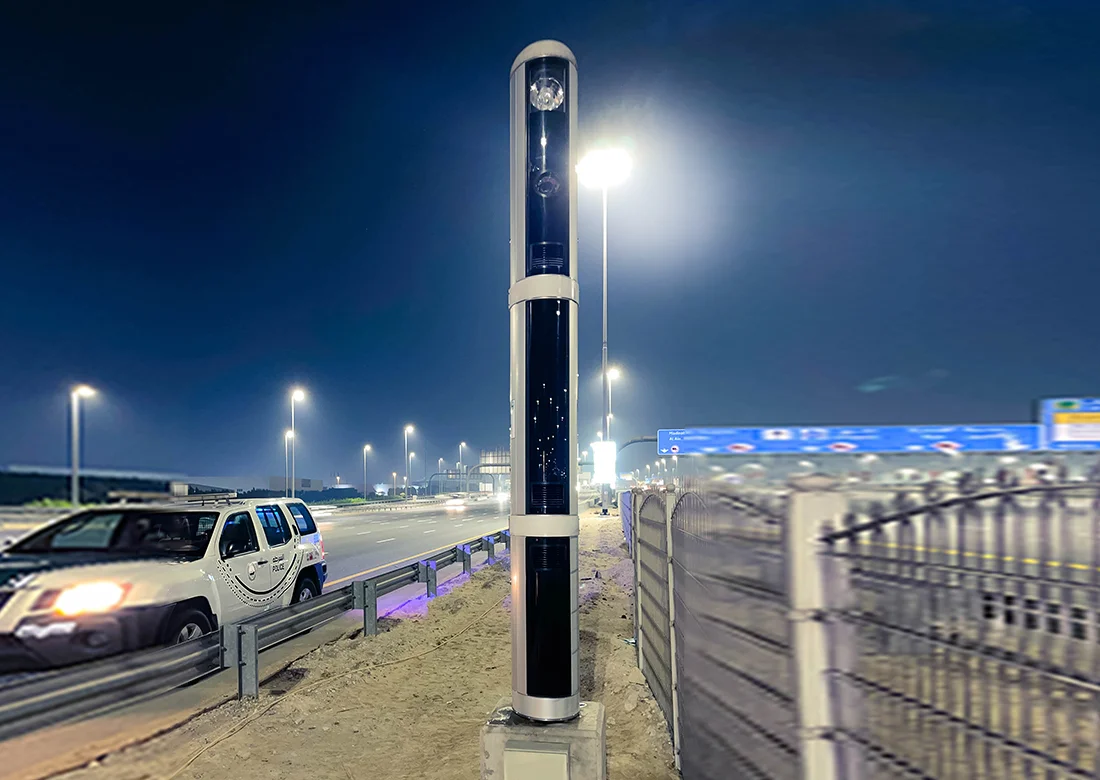
“The AI-powered radar identifies violations with precision,” says Eyad Al Barkawi, general manager of KTC International. “For instance, it can differentiate between clothing and a seat belt, even in lowlight conditions, ensuring accurate enforcement of this life-saving regulation.”
Combining AI analytics with infrared imaging, the system can penetrate tinted windows, and detect hand movements and phone-light patterns rather than relying on visible illumination. This makes the system flash-free, which in turn helps to make it more portable, enabling deployment locations to be changed easily to meet demand.
Dubai now operates more than 10,000 smart cameras networked to a central Command Control Centre and is targeting |zero road fatalities by 2030 — a goal that looks credible given the city has already reduced its road fatality rate by 90% since 2007, from 21.7 to 1.8 deaths per 100,000 population, with severe fines helping to increase compliance.
Along the coast in Abu Dhabi, 750 Vitronic Poliscan FM1 units have been deployed. These use scanning lidar that pulses 158 laser beams 15,000 times per second to map a 3D corridor across six lanes in both directions. In these cameras an AI engine helps distinguish vehicles from pedestrians and cyclists to suppress false triggers.
“The range of enforcement applications has increased significantly over the past couple of years, mainly driven by AI,” says Boris Wagner, Vitronic’s head of business unit traffic, who anticipates further advances in integrated multi-functional platforms performing speed, distance, and red-light checks simultaneously from a single installation.
Jenoptik Smart Mobility is also taking its enforcement capabilities to the next level, using AI analytics to enhance existing hardware. “AI is an important part of our product portfolio,” says Gavin Eaton, Jenoptik’s vice president for R&D. “We can take our AI models and run them in all our devices, to take enforcement beyond speed, into more advanced scenarios. So that could be wrong-way detection, making an illegal turn or distracted driving — phone use — or not wearing a seatbelt.”
AI vehicle fingerprinting
Kapsch TrafficCom’s HoTCap system premiered at Intertraffic Amsterdam in March 2026. HoTCap (Holistic Toll Capture) augments number plate recognition by building a unique fingerprint from a vehicle’s overall shape and colour characteristics. This fingerprint can then be compiled with multiple plate reads from different cameras, which may only be partial, to build a fully robust identity for each vehicle.
“We can take our AI models and run them in all our devices, to take enforcement beyond speed, into more advanced scenarios”
One key advantage of the system is that because multiple cameras are used to build each ID, the view from each camera does not need to be perfect, so they can be roadside-mounted or on existing gantries, The system is hardware agnostic, working with existing camera installations without requiring new infrastructure.
“Any infrastructure that you can remove is a good thing,” says Samuel Kapsch, COO of Kapsch TrafficCom. “Lower maintenance costs mean lower risks. You’re really leveraging technology itself and trusting in the algorithms.”
“All of these captures make up a fingerprint,” says Markus Russold, VP global sales enablement tolling at Kapsch TrafficCom. “That’s the all-important enabling technology.”
HoTCap is designed not as a replacement for existing tolling systems but as an AI-powered layer on top of them, targeting the residual enforcement gap that persists even in well-performing networks.
A related challenge is when drivers deliberately render their plates unreadable by traditional ANPR cameras, by using films, sprays or tampering — a phenomenon known as ‘ghost plates’ (or ‘stealth plates’ in the USA) It is being tackled by UK manufacturer MAV Systems through a similarly multi-layered AI approach.
GhostPlate technology embedded in MAV’s AiQ camera platform, uses simultaneous colour and infrared capture to expose these plates, which look normal to the naked eye. The AI compares what the camera sees in normal light against what it sees in IR, flagging anomalies in plate reflectivity and typography.
“Our findings offer evidence that carefully deployed AI technologies can create real, system-wide improvements”
MAV’s own data suggests that 2—5% of vehicles on typical UK roads are operating with ghost plates, rising to 25% in congestion charging zones where there is a financial incentive to evade detection — and to as high as 40—55% at one major international airport, where drop-off charges are in force. Further analysis found that around 15% of those ghost-plate vehicles were also untaxed, without MOT, or unregistered.
What’s next?
The trajectory is unmistakable. AI enforcement is converging on a model where a single roadside unit captures a dozen or more offence types, processes evidence at the edge, deletes non-violations within hours, and forwards verified cases through an automated prosecution pipeline with human review as a safeguard rather than a bottleneck.

To this end Hikvision and Neural Labs announced a global partnership in March 2026 embedding Neural Edge vehicle-analytics software directly into Hikvision’s DeepinView cameras, extracting plate, make, model, colour, classification, and speed at the edge with no back-office server required. Meanhile Flock Safety, which acquired drone-as-first-responder pioneer Aerodome in October 2024, was by late 2025 reading number plates from drones at 2,000ft altitude. “No other technology helps law enforcement officers get eyes on the scene faster than a drone,” says CEO Garrett Langley.
As the technology advances rapidly, privacy advocates remain watchful: Duke University law professor Jolynn Dellinger argues that while the safety case may justify compromise, “it’s still important to recognise that it is a privacy interest.”
The EU AI Act, which took effect in August 2024, classifies many of these systems as high-risk, demanding transparency documentation and bias auditing a compliance burden that favours established multinational vendors.
Meanwhile the shift to Traffic Enforcement as a Service subscription models is converting large capital expenditure into predictable operating costs, lowering the barrier for cash-constrained municipalities.
For road authorities worldwide, the question is no longer whether to deploy AI-powered enforcement, but how quickly they can scale it — and whether their legal frameworks can keep pace with what the technology can already do.
Global picture
• In Athens, Greece’s Ministry of Digital Governance launched an eight-camera AI pilot in December 2025 that logged roughly 40,000 violations within its first month. The cameras dectect red-light running, speeding, mobile phone use, seatbelt noncompliance, stopping on pedestrian crossings, bus-lane and emergency lane misuse, and ignoring pedestrian crossings. A full 2,500-camera rollout will also add helmet non-compliance and vehicle-inspection failures to the detectable offences.
• Hanoi, Vietnam, deployed 1,837 AI cameras across 195 intersections in December 2025, detecting 28 categories of violation and recording traffic-flow improvements of 4-18% at AI-controlled junctions in the system’s first three months.
• Australian AI distracted-diving detection pioneer Acusensu has installed its Heads-Up solution across six Australian states, ten UK police forces, six US jurisdictions, and New Zealand. In Western Australia, it has now launched a multi-function enforcement trailer combining phone, seatbelt, point speed, average speed, and unregistered-vehicle detection in a single unit, which detected more than 300,000 offences in its first eight-month trial.
This article first appeared in the April/May issue of TTi