

New research from the Greater Cambridge Partnership (GCP) self-driving bus project, Connector, suggests the biggest challenge for self-driving services may not be the technology itself, but ensuring services are designed around passenger needs.
The study, commissioned through Connector, explored attitudes towards self-driving buses among people with a range of access needs and protected characteristics. It involved 48 participants and was carried out by human-centred design specialists Anthrometric, using immersive virtual reality experiences alongside in-person focus groups and accompanied journeys.
Trust in the technology, but a need for support
Participants were generally prepared to trust the technology to drive safely, but stressed the importance of information, reassurance and support throughout the journey, including at pick-up and drop-off.
The research found that drivers help passengers in ways that are easy to overlook, such as noticing who is waiting, interpreting what people need and stepping in when required. Passengers expected these functions to be built into the design of self-driving buses, with clear routes to human support when needed.
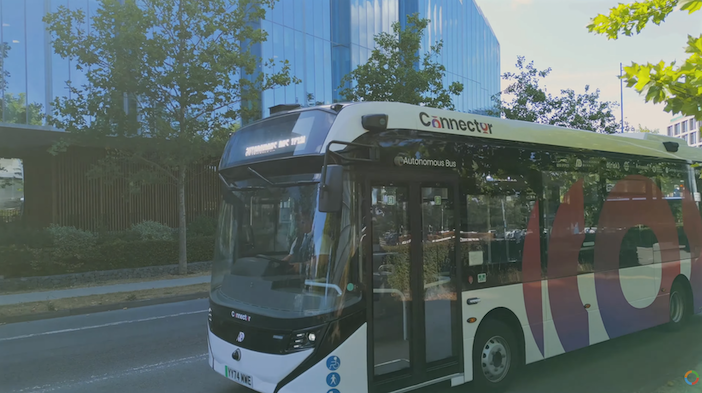
The partnership notes that self-driving buses have the potential to offer longer operating hours to communities that currently have limited transport options, and to make roads safer by never getting tired or distracted.
“It is really encouraging that people are getting more comfortable with self-driving technology, what matters now is to move from proving the technology, to designing a service that people choose to use, by building in the support they need,” says Dan Clarke, head of innovation at the Greater Cambridge Partnership.
“The research shows every stage of the journey matters; from flagging down the bus to getting information on board and support if needed. The next stage of our work is to design a service that works for everyone.”
Next phase: designing the support model
The next phase of Connector is to develop and test how a future support model will work. That includes deciding which of the driver’s roles are automated, which can be handled remotely and where access to human support may still be needed.
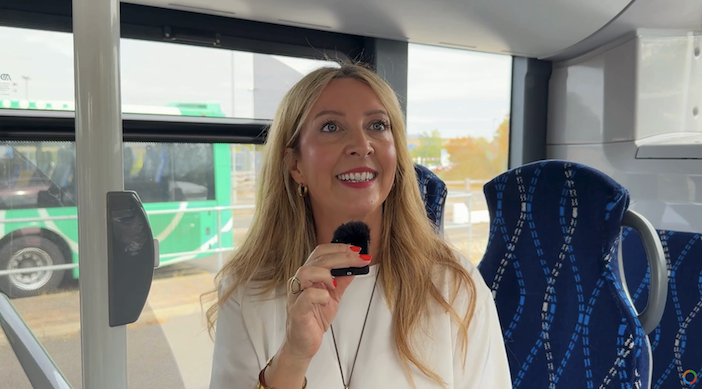
“The real opportunity is not just teaching the bus to drive itself,” says Dr Clare Mutzenich, chief executive of Anthrometric, who authored the report. “It is designing a transport service that supports everyone equally, at every stage of the self-driving journey.”
About Connector
Connector is trialling self-driving buses in Cambridge on two routes: Cambridge West and the Cambridge Biomedical Campus. The project was recently awarded a further £3.88 million in government funding, and is looking at what is needed for self-driving buses to move from trial stage to commercial reality.
It is delivered by a consortium led by GCP, made up of Whippet, Fusion Processing, Alexander Dennis, dRisk and Anthrometric.