

Opsys Technologies argues that falling lidar costs are only part of the equation, with scalable deployment, reliability and operational simplicity now key to making lidar viable infrastructure.
Falling sensor costs and rapid advances in performance have moved lidar technology beyond pilots and into real transportation deployments. However, being affordable to deploy is not the same as affordable to scale. Transportation equipment is infrastructure, not consumer electronics.
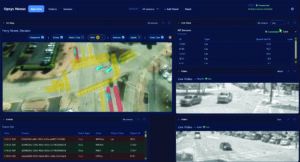
For years, lidar development has been driven by an arms race around specifications: more channels, more points per second, higher resolution and greater range. Those metrics matter, but transportation agencies do not buy points. They need to know what is there, where it is, where it is going, how fast it is moving and whether action is required.
The next challenge is therefore not simply reducing sensor cost but reducing both cost and complexity of deploying and operating lidar at scale.
Scale changes the economics
Scaling lidar introduces both logistical and operational challenges. A roadside sensor should remain in service for many years, often with minimal attention, and routine maintenance must be something a field technician can handle without becoming a lidar specialist. Installation, calibration, diagnostics and replacement all need to be straightforward.
The same applies to supporting infrastructure. Roadside cabinets often have little or no space for additional computing equipment. Adding industrial PCs, GPUs, switches and other components increases complexity, power and cooling requirements, and the number of components that must survive the roadside environment. Each additional part is one more thing that can fail in the field. Every added component can mean another reason for a truck roll.
Global lidar firm Opsys Technologies has experienced these challenges firsthand in deployments involving more than 150 fused lidar sensors, where supporting the raw point-cloud architecture required major network upgrades and specialist personnel.
An otherwise affordable lidar can therefore still create an expensive system. At scale, the cost of the sensor matters less than the cost of everything the sensor requires around it.
Lidar needs to become boring
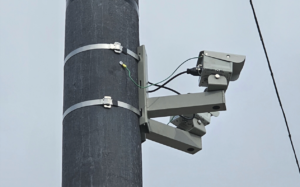
For lidar to become infrastructure, it needs to become boring. Installation should be straightforward, calibration repeatable, diagnostics clear and routine maintenance possible with standard equipment and tools. Replacing and recalibrating a sensor should not require a lidar specialist.
A scalable sensor also does not need to see everything simply because it can. It needs to see enough to perform the application efficiently, accurately and reliably. Intelligence should increasingly happen inside the sensor itself. That does not mean point clouds disappear.
For most ITS applications, the point cloud should increasingly become something the sensor understands, rather than something the operator must understand.
“Operational simplicity, such as standard mounting hardware, standard cabling and field-serviceable components, helps make lidar installation and maintenance routine and reduce training time.”
The next evolution of lidar
Jerone Floor, senior director of product at Opsys, notes how his personal experience with complex lidar deployments has shaped the company’s product philosophy, leading it to design around scalability from the start.
For Opsys, affordability at scale starts with reliability. True solid-state lidar architecture is central to achieving the long service life needed to compete with established traffic technologies such as camera systems. Embedded plugin-based intelligence moves detection, tracking and application logic into the sensor itself, eliminating the need for dedicated external processing equipment for many applications.
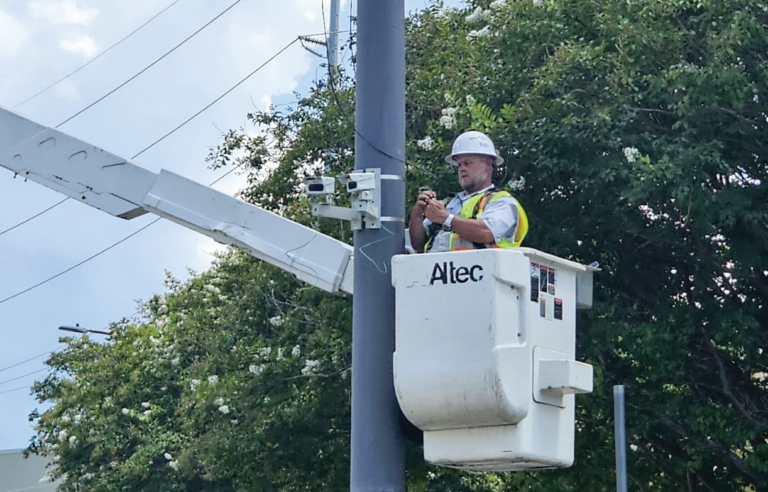
Operational simplicity, such as standard mounting hardware, standard cabling and field-serviceable components, helps make lidar installation and maintenance routine and reduce training time. The company’s motto is: ‘If you can install a camera, you can install our lidar.’
Scalability also depends on the ecosystem around the sensor. Opsys works closely with traffic solution providers such as Temple to simplify how lidar is installed, supported and integrated into the next generation of traffic management systems.
Lidar’s next phase will not be won by whoever creates the largest point cloud. It will, instead, be won by systems that can operate reliably, economically and intelligently at scale. Because at scale, every unnecessary point, watt, component and truck roll matters.