



The simple wave of thanks between drivers seems to be fading from our roads. As cognitive overload, stress, and automation reshape driving behavior, are we losing an essential element of the cooperative fabric that keeps traffic flowing safely? Professor Nick Reed provides his insight
I am certainly into the second half of my career and with that being the case I try not to wear my rose-tinted spectacles when looking through the ‘retrospectoscope,’ but I’m sure there was a time when the wave of thanks between drivers was more common than it is now. That fleeting moment of civility between strangers leaves both drivers with a shared sense of goodwill. However, it seems to be disappearing and perhaps this superficially minor shift might say something deeper about how driving behavior and social norms are changing.
Such gestures play an important role in the cooperative fabric of traffic systems, confirming mutual awareness and reinforcing that driving, despite its mechanized nature, is a shared human activity requiring trust and empathy. The exact form varies by culture. In the UK, the wave or finger-lift from the steering wheel has long been a symbol of courtesy. In Japan, drivers often blink their hazard lights briefly to express gratitude, while in parts of continental Europe, a flash of headlights or quick head-tilt may serve the same purpose. What unites these customs is the social intent behind them: recognition of cooperation and gratitude that may encourage future reciprocation.
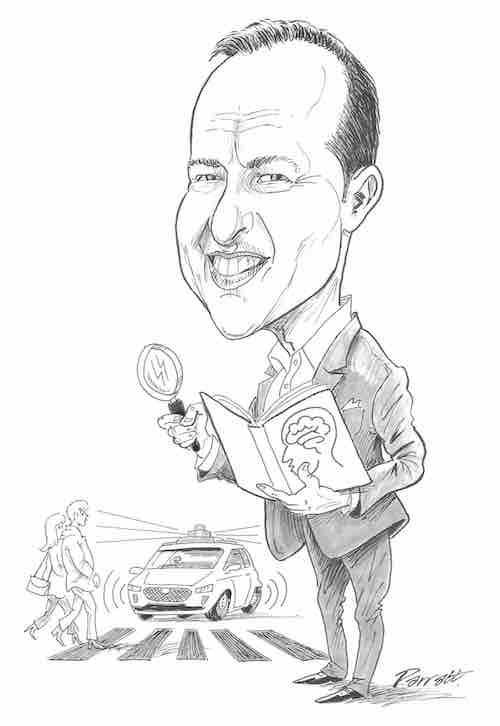 Why might such acknowledgments be declining? One explanation may be cognitive overload. Modern vehicles and road environments overwhelm drivers with information from digital dashboards, touchscreen interfaces, navigation prompts, driver assistance alerts, signs and markings – all demanding constant attention. When mental capacity is saturated, small social rituals are deemed surplus to requirements.
Emotional factors are also relevant. Many drivers carry stress from daily life into the car. Post-pandemic fatigue, economic anxiety and a general rise in impatience and distrust all feed into driving behavior. The anonymity of being behind glass and metal amplifies self-interest and erodes empathy. Without eye contact or social accountability, drivers lose the sense that they are part of a cooperative system and instead simply want to complete their journey with as few interruptions as possible.
“Gestures play an important role in the cooperative fabric of traffic systems”
Technology may also be reshaping this dynamic. As driver-assistance systems handle more vehicle control, driving becomes more passive. One can imagine an AV using its lights to show appreciation but a human reciprocating by waving to a self-driving vehicle seems absurd.
Thus, we have a feedback loop where drivers see fewer acknowledgments and therefore offer fewer in return. This impacts not only etiquette but might influence safety, as mutual understanding is replaced by frustration or indifference. A ‘re-humanizing’ of driving culture cannot be enforced or automated. It requires systems, policies and education that remind us of the human interactions associated with every journey. While automated driving is emerging, such interactions will be with us for many years to come so whether it is a wave of the hand or a flash of the headlights, there is a simple message: I see you, I recognize our shared endeavor and we’re in this together. Let’s make every journey a friendly one.
This column first appeared in the November/December issue of TTi