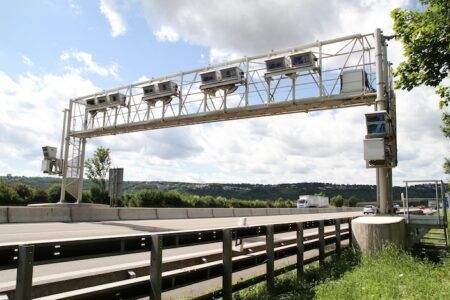


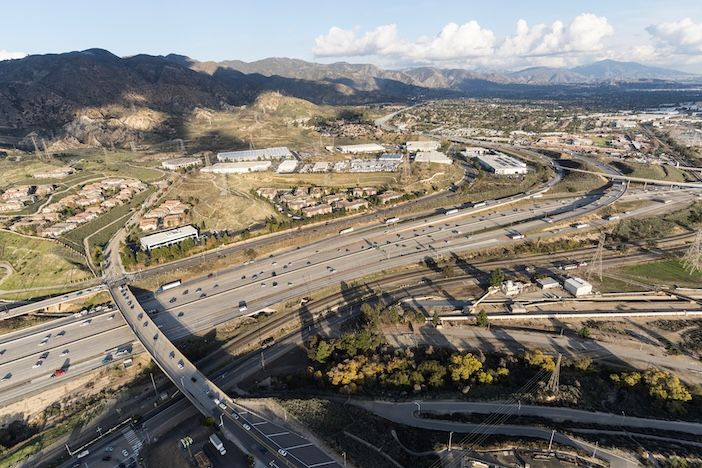
The Orange County Transportation Authority (OCTA) and the Riverside County Transportation Commission (RCTC) have awarded Kapsch TrafficCom a contract valued at more than $170m to consolidate back-office system (BOS) and customer service centre (CSC) operations for the SR-91 and I-15 Express Lanes in Southern California. The three-party agreement runs through 2041.
The agencies expect the consolidation to deliver more than $33m in operating efficiencies across implementation, operations and pass-through costs over the contract term. Both the OCTA and RCTC boards approved the award unanimously.
One account, one contact for drivers
SR-91 is the main corridor linking the Inland Empire and Orange County, crossing from RCTC’s jurisdiction into OCTA’s near the county line. Tolling on the corridor has historically been run by two agencies, each with its own back-office system and customer service centre. Drivers using toll facilities in both counties often received separate invoices, held separate accounts and dealt with different customer service teams depending on where their transactions took place.
Under the new agreement, OCTA and RCTC will share a single back-office system and a single customer service contact for drivers using either corridor. According to the release, roughly 35 per cent of customer service interactions already involve both SR-91 and I-15.
Kapsch already runs the platform for RCTC’s part of the road, and that platform will be extended to incorporate SR-91 into the existing I-15 back-office system. This will give both agencies a unified view of the corridor.
Traffic volumes
The SR-91 Express Lanes serve more than 56,000 users a day in Riverside County and more than 60,000 a day in Orange County, according to data published by the agencies. Combined, the corridors process more than 6.3 million transactions a month.
Implementation timeline
The agencies expect a 12-month implementation, which they contrast with a typical re-procurement that can take five years to reach go-live. During the transition Kapsch will scale up CSC operations and hire and train additional customer service representatives. Both corridors are due to operate under one consistent process by summer 2027.
Under California’s toll structure, savings translate directly into lower operating costs and higher excess revenue, which is reinvested in the corridor to benefit transit and general-purpose transportation initiatives.
Existing role on I-15
Kapsch has been RCTC’s back-office and roadside operations partner for the I-15 Express Lanes since 2017, and its role expanded in 2025 to include occupancy detection technology on SR-91. The company says it has met all 14 contractual key performance indicators since the current I-15 platform launched in 2021, and cites positive customer satisfaction ratings.
Beyond back-office work, Kapsch’s I-15 role covers roadside infrastructure, dynamic pricing and day-to-day roadway management, run through a co-located Traffic Operations Center in Corona, California.
“This partnership reflects what we’ve built together with RCTC over the past years,” says JB Kendrick, president of Kapsch TrafficCom North America. “That kind of trust comes with real responsibility to both the agencies and to the hundred thousand people using these lanes every day. Our job now is to continue to earn that trust every day through 2041.”
Kapsch TrafficCom North America serves Canada, the United States and Puerto Rico, with 700 team members across 25 offices. The company says it processes more than one billion customer transactions a year in the US.