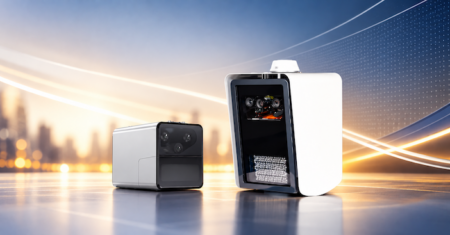



Federal safety leaders, researchers, automakers and technology providers gathered in Virginia on 15 October to see demonstrations of systems that detect distracted driving and flag crash risk before a collision occurs.
The National Distracted Driving Coalition’s Technology Transforming Transportation: Innovation to Eliminate Distracted Driving event took place at the Insurance Institute for Highway Safety (IIHS) Vehicle Research Center in Ruckersville. It was held on the fifth annual National Do Not Disturb While Driving Day.
Jonathan Morrison, administrator of the National Highway Traffic Safety Administration (NHTSA), gave opening remarks, and Thomas Chapman, a board member of the National Transportation Safety Board (NTSB), gave closing remarks. Members of the Modern Analytics for Roadway Safety (MARS) Coalition attended.
“There’s an irony at the heart of distracted driving. Technology created this problem, and technology is going to be a big part of how we solve it,” said Andrew Rogers, executive director of the MARS Coalition.
Technology on show
The demonstrations covered technologies that detect distraction behind the wheel, give drivers real-time feedback and generate data that can flag high-risk corridors before a crash occurs. Autonomous vehicles were also covered, as a way of ultimately removing driver distraction from the equation.
Other coalition members at the event included StopDistractions.org, The Kiefer Foundation, the National Safety Council, the Governors Highway Safety Association and the Alliance for Automotive Innovation.
“Today we saw tools that detect distraction and intervene in real time, data that tells us where crash risk is highest, and autonomous vehicles that have the potential to remove driver distraction entirely. These solutions are real. Our job is to make sure government, industry, and safety advocates are pulling in the same direction to get them deployed and make roadways across America safer,” Rogers added.
Views from safety organisations
“For years, we have talked about how technology contributed to the distracted driving problem. Today, we are changing that conversation and asking how technology can become part of the solution,” said Jennifer Smith, chief executive of StopDistractions.org.
“We now have tools that can help us better understand risk, support drivers, improve enforcement, and potentially prevent crashes before they happen. For the families who know the devastating consequences of distracted driving, the goal isn’t simply more innovation –– it’s putting the best solutions we have to work and saving lives today, not in the future,” she added.
According to Paul Scullion, director of safety policy at the Alliance for Automotive Innovation, the auto industry backs a “safe system” approach to driving. “While today’s vehicles are safer and more advanced than ever, it’s important that when you’re behind the wheel of a vehicle — you must pay attention. No exceptions. But because there are lots of opportunities for the driver to get distracted, the auto industry backs a ‘safe system’ approach to driving. This includes driver education, support for enforcement of traffic laws and infrastructure investment to encourage safer driving behavior. Technology plays an important role too, and auto manufacturers are making major investments in systems that help support drivers so everyone gets home safely,” said Scullion.
“Technology is changing how we address distracted driving. The Technology Transforming Transportation event brings researchers, innovators, and safety advocates together to explore what’s available today and what’s ahead,” said Melissa Hamrick, executive director of The Kiefer Foundation and a steering committee member of the US National Distracted Driving Coalition. “Made possible through collaboration with our partners, this event builds understanding of these evolving tools and the role they can play in making our roads safer,” she added.
Impaired driving
Ryan Smith, senior director of traffic safety research and innovation at Responsibility.org, said in-vehicle technologies could also address impaired driving. “The continued advancement of in-vehicle technologies represents tremendous progress in our shared effort to prevent crashes and save lives. As these technologies become more widely available, they have the potential to address high-risk behaviors, including impaired driving, before tragedy occurs,” said Smith.
“Impaired driving crashes are 100% preventable, and we’re proud to join our partners in advocating for innovations that can help create safer roads for all,” he added.
About the MARS Coalition
MARS is a coalition of industry leaders, safety organisations and technology innovators that works to prevent crashes before they occur. It promotes the use of telematics, artificial intelligence and predictive analytics, and supports policies that improve roadway design and curb dangerous driving behaviour.