

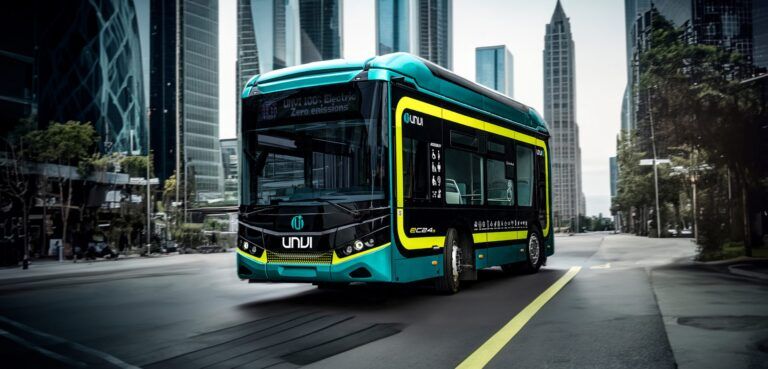
Imagry and UNVI have announced a partnership to integrate Imagry’s artificial intelligence (AI)-based autonomous driving technology into UNVI’s electric buses, with the first vehicle set for deployment in Germany in the third quarter of 2026.
San Jose, California-based Imagry, a developer of HD-mapless autonomous driving technology, said the deal will see its self-driving software integrated into UNVI’s M3-category electric buses. Ourense, Spain-based UNVI specialises in bus body design and manufacture.
Addressing a driver shortage
The companies said the partnership responds to growing demand for buses that run on clean energy and improve service to passengers, against a backdrop of an estimated 20% global shortage of professional drivers, which Imagry noted is growing by at least 1% a year.
“UNVI has extensive experience in developing and manufacturing bus bodies across a wide range of vehicle platforms and operational applications,” said Carlos Rivo, managing director of UNVI. “Our cooperation with Imagry shows how this flexible approach can also support innovative autonomous mobility projects. Although this first project involves a complete electric bus solution, the broader opportunity lies in adapting Imagry’s technology to different UNVI body configurations.”
Imagry said autonomous buses can be used to extend hours of operation, increase route frequency and expand areas of service, while helping to alleviate traffic congestion despite the driver shortage.
First deployment under way
The first fully integrated 10.3-metre self-driving electric bus from UNVI is on its way to a project in Germany, with integration completed in under three months. The vehicle was supplied through UBSI, which the companies say acted as the strategic vehicle integration, procurement, leasing and lifecycle support partner, managing regulatory compliance, technical readiness, fleet deployment and operational support.
The bus is pre-certified for Whole Vehicle Type Approval (WVTA) under General Safety Regulation 2 (GSR2), which the companies say meets the needs of public transportation operators (PTOs) and public transit authorities (PTAs) in cities and towns, as well as operational zones such as medical centres, airports and university campuses.
With Imagry’s AI-based perception, motion planning and vehicle control technology, the companies say the buses offer HD-mapless, location-independent driverless operation that is rapidly deployable and scalable.
“We are excited to bring Imagry autonomous driving capabilities to additional markets via UNVI’s electric bus models,” said Eran Ofir, chief executive of Imagry. “Our flexible, cost-effective, AI-based and field-proven technology provides public transportation operators and city planners with a quick and reliable way to meet their current and growing mobility challenges.”
Integration and support role
UBSI, founded in 2007, provides import, distribution, leasing and lifecycle services for buses and commercial vehicles across Europe, backed by a network of authorised service centres, round-the-clock mobile support, diagnostics and spare parts logistics.
“Deploying autonomous public transportation is far more than supplying a vehicle, it demands seamless coordination across engineering, regulatory compliance, homologation, procurement, integration, and operational reliability,” said Ibrahem Badawi, chief executive of UBSI. “This is where UBSI creates value, bridging technology developers, manufacturers, and transport operators to turn innovative concepts into reliable commercial operations. We’re proud to support Imagry and UNVI, and look forward to many more deployments.”