

Applied Information has unveiled the latest evolution of its Glance Transit Signal Priority (TSP) system, designed to support near-side bus stops – those positioned before intersections.
The announcement was made during the Technology for Transit Reliability panel at the ITS Canada GTHA Summit, being held at York University this week.
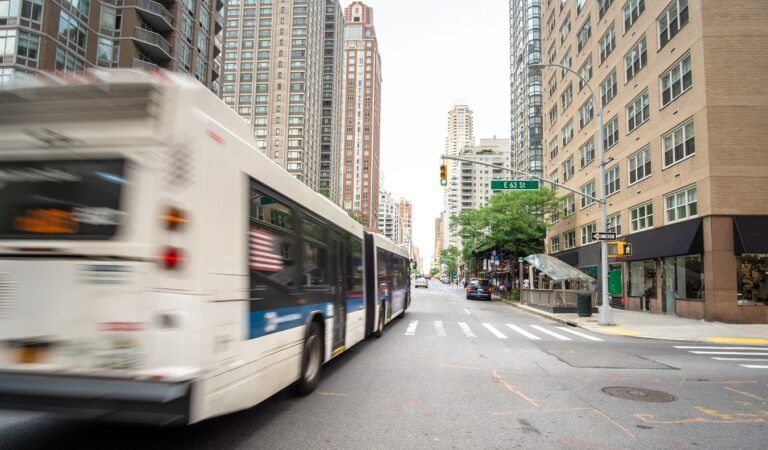
Traditional TSP systems have favored far-side bus stops, where vehicles stop after crossing through intersections. This configuration allows traffic signals to easily prioritize transit by extending green lights or reducing red phases. However, many transit agencies prefer near-side stops, which improve pedestrian safety and offer better visibility for drivers, despite the added complexity for signal control systems.
Applied Information’s upgraded Glance platform aims to solve this issue. It uses real-time data to determine whether a bus is stopping or proceeding through an intersection, allowing the traffic signal to adapt dynamically. This means lights can be delayed or extended based on when the bus is ready to re-enter traffic after a stop.
“Near-side stops have long posed a challenge for traditional signal priority systems,” said Bryan Mulligan, president of Applied Information. “This update gives transit agencies a practical way to improve service and safety at the stops they already use, without having to move infrastructure or change routes.”
The new system integrates seamlessly into the existing Glance ecosystem, using the same cloud infrastructure and signal controller interfaces. It’s designed for incremental deployment, allowing agencies to start with high-ridership corridors before scaling citywide.
Applied Information reports that pilot deployments in several cities are already showing measurable improvements in on-time performance and reduced delays at intersections. The technology also supports broader goals of reducing congestion and vehicle emissions by making public transit more efficient and reliable.