

Traffic Technology TodayTraffic Technology Today
  • News
    • A-D
      • Appointments & Staffing
      • Artificial Intelligence (AI)
      • Asset Management
      • Autonomous Vehicles & ADAS
      • Awards
      • Cloud Computing
      • Congestion Reduction
      • Connected Vehicles
      • Covid-19
      • Cybersecurity
      • Deals, Acquisitions & Mergers
    • E-J
      • Electric vehicles & infrastructure
      • Emissions & Low Emission Zones
      • Enforcement
      • Event News
      • Funding
      • Incident Detection
      • Infrastructure
      • Intersections & Traffic Signals
      • ITS
    • K-S
      • Legal / Government Regulation
      • Machine Vision / ALPR
      • Mapping, Modelling & Navigation
      • Mobility as a Service
      • Multimodality & Micromobility
      • Planning, Testing, R&D
      • Public transit
      • Safety
      • Smart Cities
      • Smart Parking
    • T-Z
      • Tolling
      • Traffic counting & categorization
      • Traffic Management
      • Traveler Information Systems
      • Variable Message Signs
      • Vulnerable Road Users
      • Weather systems
  • Features
    • Features
    • Opinion
  • Online Magazines
    • Recent Issues
    • Archive List
    • Pre-2016 Issue Archive
    • Subscribe Free!
  • Video & Audio
    • Video
    • Audio
  • Podcast
  • Events
  • Webinars
  • Technology Profiles
LinkedIn YouTube X (Twitter)
Subscribe >
Traffic Technology TodayTraffic Technology Today
  • News
      • Appointments & Staffing
      • Artificial Intelligence (AI)
      • Asset Management
      • Autonomous Vehicles & ADAS
      • Awards
      • Cloud Computing
      • Congestion Reduction
      • Connected Vehicles
      • Cybersecurity
      • Deals, Acquisitions & Mergers
      • Electric vehicles & infrastructure
      • Emissions & Low Emission Zones
      • Enforcement
      • Event News
      • Funding
      • Incident Detection
      • Infrastructure
      • Intersections & Traffic Signals
      • ITS
      • Legal / Government Regulation
      • Machine Vision / ALPR
      • Mapping, Modelling & Navigation
      • Mobility as a Service
      • Multimodality & Micromobility
      • Planning, Testing, R&D
      • Public transit
      • Safety
      • Smart Cities
      • Smart Parking
      • Tolling
      • Traffic counting & categorization
      • Traffic Management
      • Traveler Information Systems
      • Variable Message Signs
      • Vulnerable Road Users
      • Weather systems
      • Work zones
  • Features
    • Features
    • Opinion
  • Online Magazines
    1. Recent Issues
    2. Archive List
    3. Pre-2016 Issue Archive
    4. Subscribe Free!
    Featured
    July 23, 2026

    NEW ISSUE: Read the July/August 2026 edition of TTi magazine online now!

    Artificial Intelligence (AI) By Tom Stone
    Recent

    NEW ISSUE: Read the July/August 2026 edition of TTi magazine online now!

    July 23, 2026

    NEW ISSUE: Read the April/May 2026 edition of TTi magazine online now!

    April 21, 2026

    NEW ISSUE: Read the February/March 2026 edition of TTi magazine online now!

    February 25, 2026
  • Video & Audio
    • Video
    • Audio
  • Podcast
  • Events
  • Webinars
  • Technology Profiles
LinkedIn YouTube X (Twitter)
Traffic Technology TodayTraffic Technology Today
Incident Detection

TECH PROFILE: AI scene calibration unlocks incident detection on any PTZ camera

CitilogBy CitilogAugust 3, 20264 Mins Read
Share LinkedIn Twitter Facebook Email
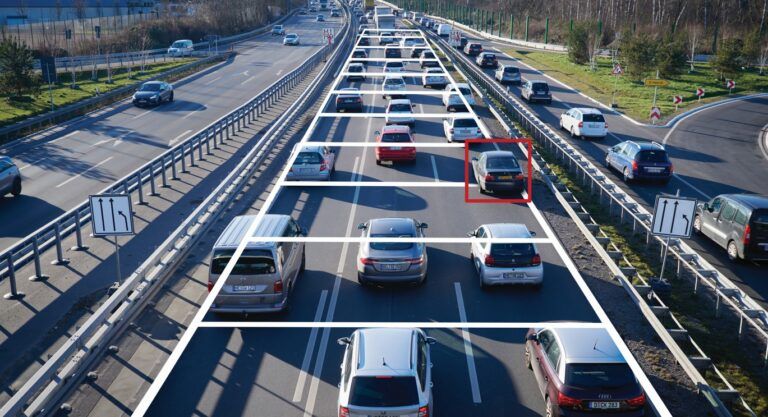
Citilog’s system automatically generates a detection mask and identifies incidents, such as stopped vehicles, within the zone

Citilog brings automatic incident detection to existing PTZ traffic cameras that lack presets, using AI-based scene calibration to detect stopped vehicles, pedestrians, and debris without manual configuration.

Road operators have spent decades expanding video coverage on highways, bridges, tunnels, and other critical corridors. Pan-tilt-zoom, or PTZ, traffic cameras are central to that infrastructure because a single camera provides flexible visibility across large operational areas.

Yet, many of these cameras remain passive monitoring tools, useful only when an operator is actively watching the screen. Consequently, the industry has built far more camera coverage than automated detection coverage. For agencies pursuing Vision Zero goals, closing this gap without requiring a major roadside build-out has become a pressing priority.

The PTZ challenge

The primary obstacle to deploying automatic incident detection (AID) on PTZ traffic cameras involves contextual awareness. Standard computer vision algorithms require a defined digital road surface mask to understand where travelled lanes and shoulders are located, which help reduce false alarms from irrelevant background movement. With a fixed camera, that context remains constant.

PTZ cameras complicate that model because the scene changes whenever the camera pans, tilts, or zooms. The established solution has been preset positions. When a PTZ camera returns to a known view, the system loads the corresponding digital mask and analyses the scene much like a fixed camera. Citilog’s AID has supported preset-based PTZ cameras for more than a decade, including the broader incident detection set and traffic data collection when each preset has been configured.

However, that approach leaves a substantial population of traffic cameras disconnected from automated safety networks. Some PTZ cameras do not support presets. In other deployments, position feedback does not reach the incident detection platform. The operator has video, poles, power, and communications, but the analytics cannot reliably determine where the travelled roadway sits in the current view.

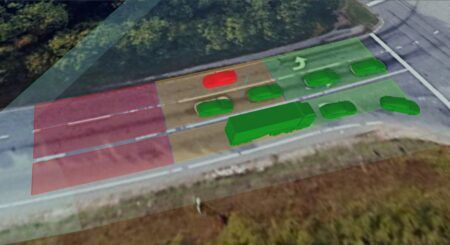
With automatic incident detection, traffic management centres convert passive video feeds into a proactive safety network

Automatic scene calibration

Citilog addresses that gap through automatic, AI-based calibration. Instead of depending on a predefined mask tied to a known camera position, the system observes live traffic movement, builds an understanding of vehicle trajectories, and infers the travelled roadway from that flow. The result is an automatically generated detection zone. In peak traffic conditions, the learning phase can take just a few minutes.

When the camera is moved to a different view, the system recognises the change and learns the new scene automatically, with no manual intervention. Once the scene is initialised, the system detects stopped vehicles, pedestrians, and debris within the generated zone and automatically reports incidents to the traffic management system. These detections are backed by Citilog’s deep learning models trained on more than 28 years of real-world incident data, which cut false alarms by up to 90% by filtering out shadows, reflections, and weather.

Because this update works with any traffic camera delivering a standard RTSP or ONVIF Profile S stream, agencies can extend AID without adding new cameras, cabling, or roadside infrastructure. For operators, that means earlier awareness of events using existing traffic camera networks that might otherwise depend on manual observation or external reports.

Critical corridors like the Vuache Tunnel in France highlight the importance of automatic incident detection for faster operational response

The life-saving potential of early automatic detection was demonstrated last year in the Vuache Tunnel in France, where a heavy goods vehicle stopped in the southbound bore before catching fire. An automatic incident detection alert prompted the control centre to close the tunnel before the fire fully developed, preventing other vehicles from entering and allowing the driver to be safely evacuated.

That lesson is increasingly relevant for traffic operations. The easiest and least costly step in improving roadway safety is adding software intelligence to existing infrastructure, not adding more hardware. As agencies pursue Vision Zero objectives under staffing and budget constraints, converting passive PTZ views into active detection coverage can help close the gap between simply seeing the road and reacting fast enough to save lives.

Share. Twitter LinkedIn Facebook Email
Previous ArticleTECH PROFILE: Solid-state lidar brings intelligent 3D perception to wrong-way detection
Citilog
  • Website

Related Posts

Pre-deployment site design reduces installation time by configuring sensor placement and alarm zones in advance
Safety

TECH PROFILE: Solid-state lidar brings intelligent 3D perception to wrong-way detection

August 3, 20263 Mins Read
African-American man with a bald head an small moustache and glasses with a friendly smile in business atire, head and shoulders
Enforcement

OPINION: How data, drones and ITS can create smoother border crossings

July 30, 20263 Mins Read
Motorway fast traffic light trails at night
Connected Vehicles

Here Road Alerts qualifies for Euro NCAP scoring

July 28, 20263 Mins Read
Latest Posts
Citilog’s system automatically generates a detection mask and identifies incidents, such as stopped vehicles, within the zone

TECH PROFILE: AI scene calibration unlocks incident detection on any PTZ camera

August 3, 2026
Pre-deployment site design reduces installation time by configuring sensor placement and alarm zones in advance

TECH PROFILE: Solid-state lidar brings intelligent 3D perception to wrong-way detection

August 3, 2026
Google Street View image of Bratton Road near Westbury, Wiltshire, in March 2024, showing hedges trimmed back from the carriageway with a clear sightline towards the junction

Connected vehicle data uncovers Wiltshire junction hazard

August 3, 2026
FREE WEEKLY NEWS EMAIL!

Get the ‘best of the week’ from TrafficTechnologyToday.com direct to your inbox every Thursday


Supplier Spotlights
  • Conduent Transportation
    Conduent Transportation
  • Norbit ASA
    Norbit ASA
  • Teconer Oy Finland
    Teconer Oy
  • MESSAGEMAKER DISPLAYS
  • Carrida Technologies GmbH
    CARRIDA Technologies GmbH
  • triple sign system AB
    Triple Sign System AB
  • Cross Zlin
    CROSS Zlín a.s.
  • SMATS traffic solutions logo
    SMATS Traffic Solutions Inc.
  • Star Systems International Limited
Our Social Channels
  • Twitter
  • YouTube
  • LinkedIn
Getting in Touch
  • Free Email Newsletters
  • Contact Us
  • About Us
  • Supplier Spotlight

Upcoming Events

Notice
There are no upcoming events.
© Copyright 2026 Mark Allen Group. All rights are reserved, including those for text and data mining, AI training, and similar technologies.
  • Cookie Policy
  • Privacy Policy
  • Terms & Conditions

Type above and press Enter to search. Press Esc to cancel.