


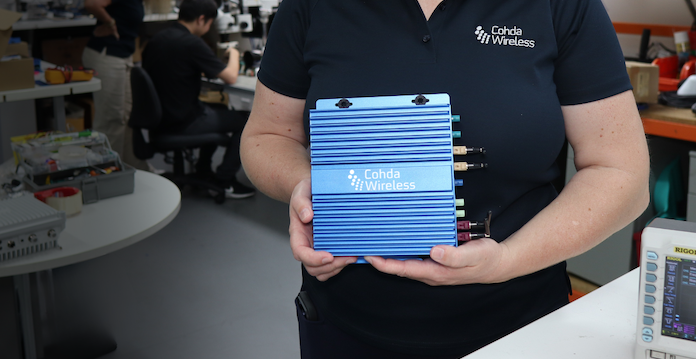
Cohda Wireless’s MK6 on-board unit (OBU) has been certified by the OmniAir Consortium, the US-based industry association that oversees interoperability and certification for intelligent transportation systems (ITS), tolling and connected vehicle technologies.
The certification follows OmniAir’s approval of Cohda’s MK6 road-side unit (RSU) in July 2024, when it became the first LTE cellular vehicle-to-everything (C-V2X) PC5 device certified for deployment in the United States. With both the OBU and RSU now certified, Cohda Wireless, headquartered in Australia, says customers have access to a complete, interoperable C-V2X platform for deployment across the country.
The MK6 OBU met OmniAir’s LTE-V2X conformance test specifications for on-board units – industry-developed test cases based on established technology standards for connected vehicles and transportation environments. OmniAir Certified devices are tested for interoperability, performance and security, in addition to standards compliance.
Industry reaction
“Congratulations to Cohda Wireless for earning OmniAir Certified status for their C-V2X OBU,” says Jason Conley, executive director of OmniAir Consortium. “OmniAir Certification provides assurance to deployers that connected vehicle technologies are trusted, interoperable, and conform to industry standards.”
According to Paul Gray, chief executive of Cohda Wireless, the dual certification gives US transportation agencies a proven hardware foundation on which to build connected vehicle programmes. “The state departments of transportation we are working with in the US are the frontrunners in the connected intelligent transport revolution and are paving the way for others to follow,” he says.
US deployments under way
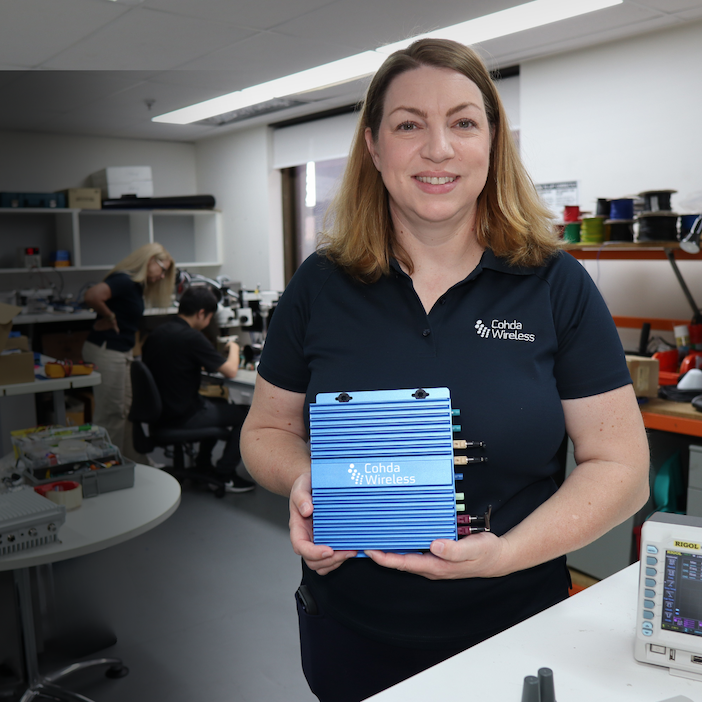
Cohda’s MK6 RSU and OBU platforms are already being supplied into major US connected vehicle deployments.
In Arizona, Cohda Wireless is supporting the Maricopa County Department of Transportation’s Connected Vehicle Acceleration Zone (CVAZ), a deployment backed by the US Department of Transportation that is expected to connect around 750 physical and virtual roadside units with approximately 400 on-board units across transit, emergency response and freight fleets. Cohda is supplying MK6 RSU and OBU kits across the CVAZ application zones.
The company is also contributing to the Georgia Department of Transportation’s (GDOT) Connected Vehicle Program, which links road users, vehicles and infrastructure to improve road safety and mobility. As part of an upgrade and expansion of the technology deployed across the programme, Cohda is supplying thousands of MK6 roadside and on-board units to ensure the project continues to meet current technology requirements and specifications.
Platform specifications
Cohda launched the MK6 in late 2022 as a connectivity platform combining dedicated short-range communications (DSRC), C-V2X, LTE/5G and Wi-Fi/Bluetooth connectivity as standard features. The MK6 uses NXP Semiconductors’ RoadLink SAF5400 and SXF1800 chipsets, along with the Qualcomm Snapdragon Auto 5G Modem-RF Platform.
Cohda Wireless, a Danlaw company, describes itself as a global developer of connected vehicle and connected autonomous vehicle software, with applications spanning smart city, mining and other environments. Its technology links vehicles with infrastructure and pedestrians via vehicle-to-vehicle, vehicle-to-infrastructure and vehicle-to-pedestrian connections – collectively known as V2X – with the aim of avoiding accidents, reducing congestion and improving efficiency. The company has offices in Europe, China and the US in addition to its Australian headquarters, and says its products are used in the US, Europe, Australia, India, Japan, Africa, the Middle East, China and South Korea.
OmniAir Consortium’s membership includes public agencies, private companies, research institutions and independent test laboratories.