



Autonomous vehicle operator Waymo has issued a voluntary software recall covering 3,791 of its robotaxis in the United States after a series of incidents in which vehicles drove into flooded roadways in Texas.
The recall traces back to an incident on 20 April in San Antonio, where an unoccupied Waymo robotaxi encountered an impassable flooded section of road. Rather than routing around the hazard, the vehicle proceeded into the floodwater at a reduced speed and was ultimately swept into Salado Creek. No passengers were on board and no injuries were reported, but the vehicle was not recovered until four days later, found downstream near Pletz County Park along the Greenway Trail system.
It was the second San Antonio flood-related incident within a fortnight. On 4 April, another unoccupied Waymo had to be pulled from high water at McCullough Avenue and Contour Drive.
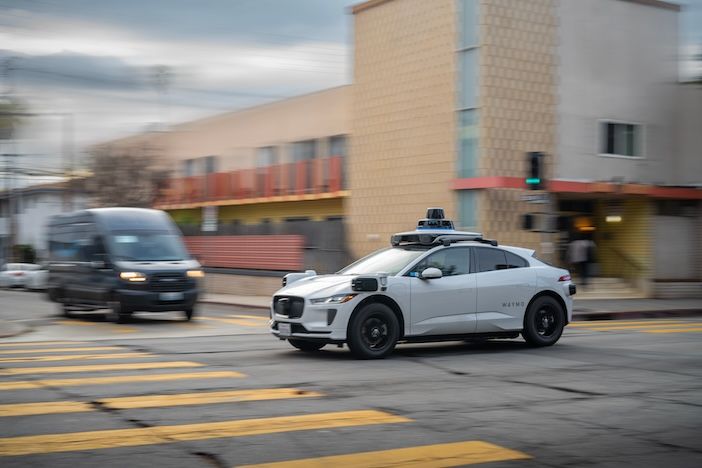
Fleet-wide recall
Waymo filed a voluntary recall with the National Highway Traffic Safety Administration (NHTSA) on 30 April. It affects vehicles equipped with both fifth- and sixth-generation automated driving systems across all of Waymo’s operating cities: Phoenix, San Francisco, Los Angeles, Austin, San Antonio, and Atlanta.
NHTSA confirmed in a recall letter that robotaxis entering a flooded roadway may cause a loss of vehicle control, elevating the risk of a crash or injury.
In a statement, Waymo said: “We have identified an area of improvement regarding untraversable flooded lanes specific to higher-speed roadways, and have made the decision to file a voluntary software recall with NHTSA related to this scenario. We are working to implement additional software safeguards and have put mitigations in place, including refining our extreme weather operations during periods of intense rain, limiting access to areas where flash flooding might occur.”
Over-the-air fix
Unlike traditional automotive recalls that require vehicles to be taken to a dealership, Waymo’s recall is handled entirely through an over-the-air software update. The company says it had applied interim mitigations — including tightened weather-related operational constraints and updated vehicle maps — by 20 April. A full software remedy remains under development.
Waymo has followed this approach before. When its vehicles were found to have illegally passed stopped school buses in Austin and Atlanta late last year, the company filed a voluntary recall and pushed an over-the-air software update across its fleet within weeks.
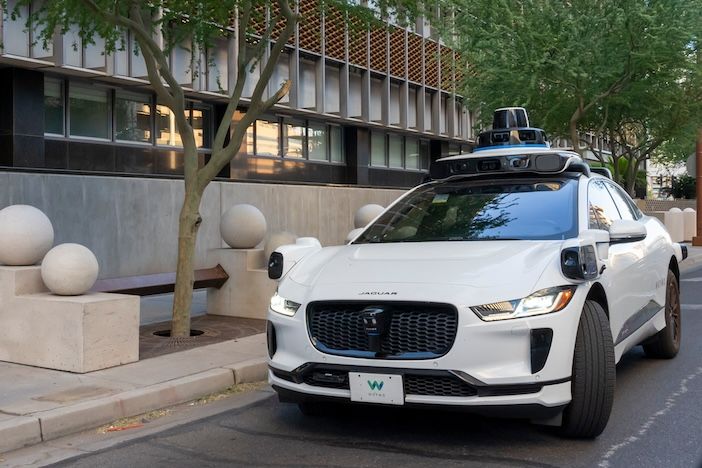
Service disruption
Waymo paused all San Antonio operations following the 20 April incident — the company’s longest service stoppage in the city to date — while it reviewed its flood monitoring procedures and safety protocols. The back-to-back flood incidents raised broader questions about how self-driving vehicles interact with emergency responders during severe weather.
A separate incident was also captured on video in Austin in early May, where a Waymo stalled on North Lamar Boulevard due to water on the road. Witnesses reported that human drivers in the adjacent lane passed through without difficulty. fox7austin
Despite the recall, Waymo said the software update will not disrupt service in Houston, where the company is simultaneously expanding its operating area to nearly 50 square miles. Expansion is also under way in Austin, Atlanta, and San Francisco.
Fleet growth context
The recall filing also revealed the scale of Waymo’s fleet growth. The total of 3,791 affected vehicles confirms the fleet has nearly doubled since September 2025, when the company first publicly acknowledged crossing the 2,000-vehicle threshold — growth that aligns with a $16 billion funding round at a $126 billion valuation earlier this year. The company now delivers 500,000 paid robotaxi rides per week across its US markets.