

UK hydrogen supplier GeoPura has been announced as the provider of the largest volume of green hydrogen ever contracted for a British construction project, supplying 2,500 tonnes of the fuel to National Highways’ Lower Thames Crossing.
The Lower Thames Crossing — a new road and tunnel between Kent and Essex designed to relieve congestion at the Dartford Crossing — is targeting carbon neutrality across its construction phase. Replacing diesel with hydrogen, electric and other low-carbon fuels is central to that ambition. Unlike diesel, hydrogen produces only water when used in a fuel cell, reducing both greenhouse gas emissions and air quality impacts for workers and nearby communities.
“We’re extremely proud to be supplying the largest volume of green hydrogen ever contracted for a British construction project,” says Andrew Cunningham, chief executive of GeoPura. “I congratulate the Lower Thames Crossing for setting a powerful example of how major infrastructure can be delivered sustainably. This contract award further strengthens the British hydrogen supply chain, driving both price efficiency and British jobs across this new, exciting industry with tangible deployments.”
Scale of the supply deal
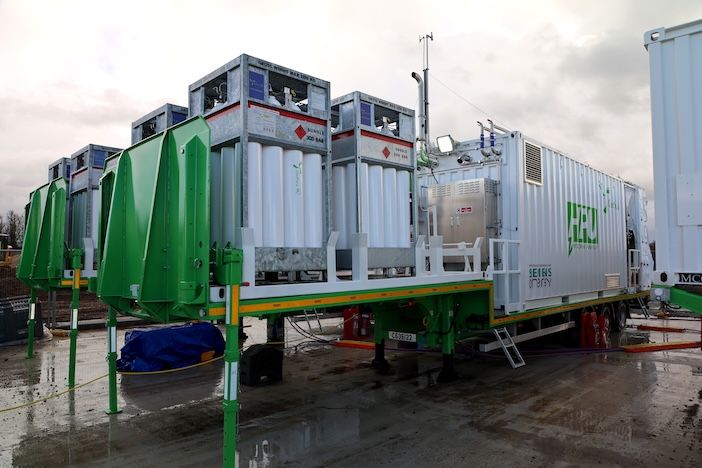
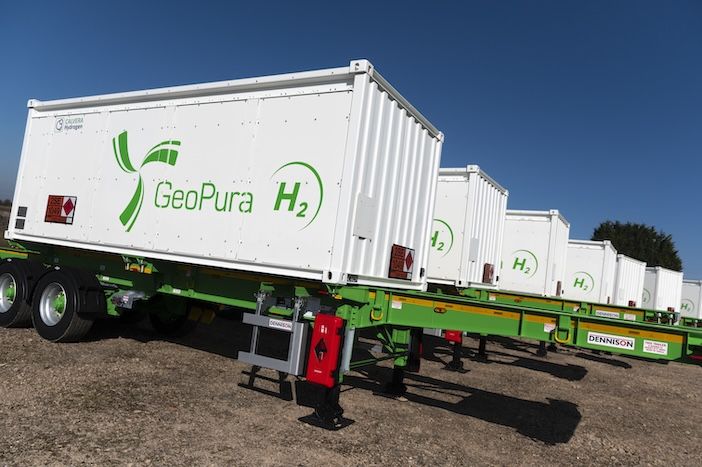
GeoPura’s 2,500-tonne hydrogen supply will be enough to replace more than 12 million litres of diesel and is estimated to save around 30,000 tonnes of CO2 emissions. The hydrogen will be delivered as a managed service — covering supply, storage and on-site distribution to equipment throughout the main construction phase.
Six GeoPura hydrogen-powered generators are already operating on the project in Essex, charging batteries used in electric machinery with zero emissions.
“Today we’ve given the green light to green hydrogen,” says Matt Palmer, executive director for the Lower Thames Crossing. “By replacing diesel with home-grown hydrogen, we’re not only reducing our own carbon footprint but also helping clean up the construction sector. National Highways is supporting new jobs and skills that will put British businesses and people at the forefront of the growing clean energy sector.”
Produced in the UK
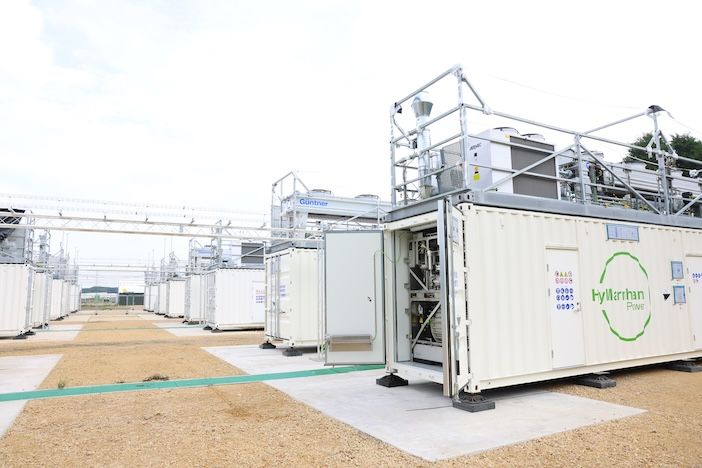
GeoPura, founded in 2019 and employing more than 170 people across the UK and Europe, produces green hydrogen via electrolysis powered by locally sourced renewable electricity. Its flagship production site — HyMarnham Power in Nottinghamshire — is located on the site of a former coal-fired power station and is supported by government Hydrogen Allocation Round 1 (HAR1) funding. The facility is expected to reach commercial operation in early 2026.
The scale of the Lower Thames Crossing purchase will also require its delivery partners — three of the largest construction firms in Europe — to invest in hydrogen-powered machinery and develop the operational skills to support it.
Chris McDonald, minister for industry, says the collaboration demonstrates how clean energy and major infrastructure projects can work in tandem. “Hydrogen has a key role to play in our industrial strategy, and from Nottinghamshire to Kent, our first flagship hydrogen projects will sustainably power projects up and down the country.”
The wider green hydrogen sector is projected to create more than 400,000 jobs and add over £7 billion to the British economy by 2030. The Lower Thames Crossing received planning permission in March 2025, with construction expected to start as early as 2026 and the new road due to open in the early 2030s.