

By the end of this decade it is predicted that 6G wireless networks will be offering not only lightning-fast communications but also the ability for the network to sense the position of objects within it, opening up a new world of possibilities for transportation management systems. Christopher Court-Dobson finds out more
6G is more than just an upgrade in speed and capacity. It is set to be the prime enabler of multiple convergent technologies, all of which have profound ramifications for traffic technology.
The new communication network is being built using the terahertz spectrum, which contains what are known as T-Rays. They sit between 0.3 to 3 terahertz (THz). They have a wavelength much shorter than visible light, on the cusp between infrared and microwave. They may be familiar as the safer alternative to X-Rays that are used in airport body scanners.
It’s a massive, mostly unutilized section of the electromagnetic spectrum, higher in frequency than any generation before.
“In every generation, we try to open up new frequencies. 5G opened millimeter wave frequencies. What we started with 5G we’ll continue with 6G, hoping to unlock the terahertz frequency,” says Walid Saad, professor of electrical and computer engineering at Virginia Tech, who is working at the intersection of wireless communication, AI, statistical physics, game theory and physical analysis, and is one of the world’s most cited researchers in these areas.
“The ubiquitous network becomes a source of situational awareness, collating signals that are bouncing off objects and determining type and shape, relative location, velocity and perhaps even material properties”
Peter Vetter, president, Nokia Bell Labs Core Research
“It’s a wireless system, not just wireless communication system. We were the first to say 6G will not only provide communication but provide other services, too. One is basically sensing the environment,” says Saad.
This is because T-Rays occupy part of the EM frequency that is easily blocked and reflected by physical objects. While lower frequencies benefit from long ranges, because they go through solid matter, T-Rays will bounce off. And it is that reflection that can be measured at the same point as the emitter.
“The ubiquitous network becomes a source of situational awareness, collating signals that are bouncing off objects and determining type and shape, relative location, velocity and even material properties,” says Peter Vetter, president of Nokia Bell Labs Core Research, which is working to develop 6G systems.
The impacts for traffic technology are huge. We could see 6G stations potentially replacing or augmenting roadside sensors, and also within enabled vehicles themselves. This might mean replacing many of the 100+ sensors that connected vehicles ship with today, with a more streamlined, terahertz-based technology.
“As 5G is rolled out commercially, enabling a rich fabric of cutting-edge technologies powering smart cities, factories, precision farming, the Internet of Things (IoT) and robotics, the rising demand and strain on the network will require a new, highly agile and cognitive architecture that automatically deploys new services optimally tailored to these applications,” says Vetter.
Digital twins
There is also potential for 6G data to be used to build 3D composite environments. At the intersection between 6G, AI and traffic technology are ongoing efforts to develop digital twins of the physical world. Currently such models usually rely on lidar and advanced video analytics for their creation and updating, but 6G could offer a more streamlined solution, which would eventually be at a much lower cost.
“Think of digital twins like a VR environment showing you the whole system,” says Saad, “You can do whatever you want with it – you can move a car, you can start the communication link, and that can be reflected back to the real world, but it can also be used as a simulation.”
“A digital twin could be related to 6G in two ways. One is you will have twins that are modeling physical systems like vehicles and so on. Second, we can actually simulate the 6G system itself to model and control it”
Walid Saad, professor of electrical and computer engineering, Virginia Tech
Not only may 6G provide the capacity for communicating information for the digital twin in real time, but it may also be operating within it, using the digital twin as an interface.
“So, a digital twin could be related to 6G in two ways,” says Saad “One is you will have twins that are modeling physical systems like vehicles etc. Second, we can actually simulate the 6G system itself to model and control it.”
Autonomous and connected vehicles could become a key component of digital mirrors. Their 6G stations could sense the environment and contribute to the virtual environment at the same time. Terahertz may come into the picture when building a digital twin, says Saad. “You may sense the environment and send it to create the twin direct linkage between the two.”
Resilience and reliability
“Using terahertz is great because it gives you lots of available bandwidth. It’s not very crowded. It gives you high rate. The challenge is that it’s very brittle,” says Saad.
It’s that brittleness, or lack of reliability that Saad and his colleagues have been working on.
“The terahertz frequency is not reliable, because it’s very easily blocked. Its range is very small. But even if the range is improved, it’s not reliable, because even a slight misalignment between your transmitter and receiver will lose the link.”
When it comes to vehicles, the link can be critical to safety and smooth functioning.
“It’s not like when you’re using Facebook or playing a VR game, where even if there’s a glitch in the in the communication system, you’re okay. If there’s an emergency message from an autonomous vehicle, or even an aerial autonomous vehicle, it needs to arrive on time,” says Saad.
By leveraging AI, Saad and colleagues have developed early-stage prototypes that can quickly recover the link if its lost. “We have shown that if you use terahertz with sensing and communication jointly designed with AI, you can make it resilient specifically for AI extended reality applications,” he says.
Effective reliability and resilience while maintaining extremely high data rates and low latency is a major hurdle to be cleared for the implementation of autonomous and connected vehicle systems. “But to be honest, with today’s deployment we still have not achieved reliability in the real world,” says Saad.
However, the brittleness of terahertz communication is offset by its ability to send terabytes of data with extremely low latency. “Think of terahertz as a binary link,” says Saad “You either get an instantaneous burst of huge amounts of data, or you get nothing.”
Zero latency
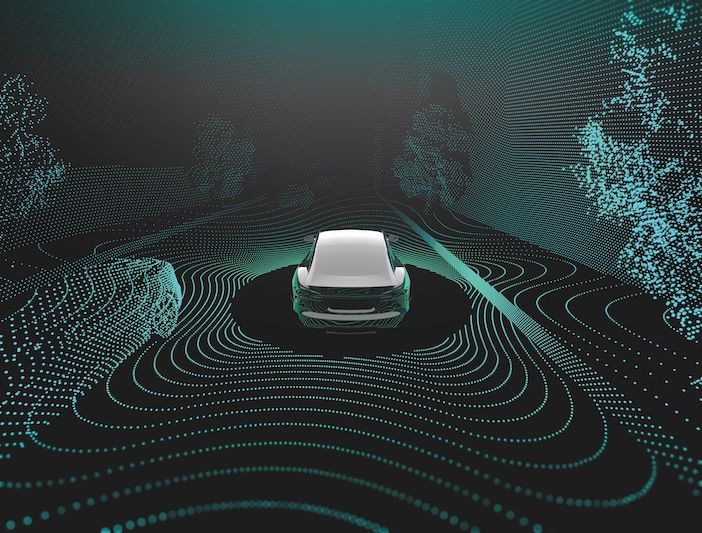
According to Saad, right now the aim is to get to zero latency. “To clarify a little bit,” he adds, “When I talk about reliability, I’m not just talking about delivering resilience. It’s not just about delivering without errors, but to deliver without errors below a certain latency.”
Latency has a lot to do with design of all the components as well as the ways they are set to interact, rather than any specific property of the terahertz frequency.
“There’s latency across the core network,” says Saad. “A lot of the industry is trying to find out how to reduce the number of routers needed to move from point A to point B?”
This is important as traffic applications are extremely latency sensitive, even more so than other virtual infrastructure.
AI native
5G deployments began in 2018, and as such are based on the assumptions of a world without advanced AI.
“You’re not going to only use your smartphone, you’re going to have a VR headset, you’re going to have connected cars, you’re going to have drones. So, to handle that you need a system that is as intelligent as the services it’s serving. And that is where the AI comes into the picture,” says Saad.
AI will not only be implemented in the end-use technologies, such as vehicles, but will be inherent in the 6G network itself. As Saad explains, “6G will be what we call an AI native system, which means AI is built in from the ground up.”
Blockchain enabled
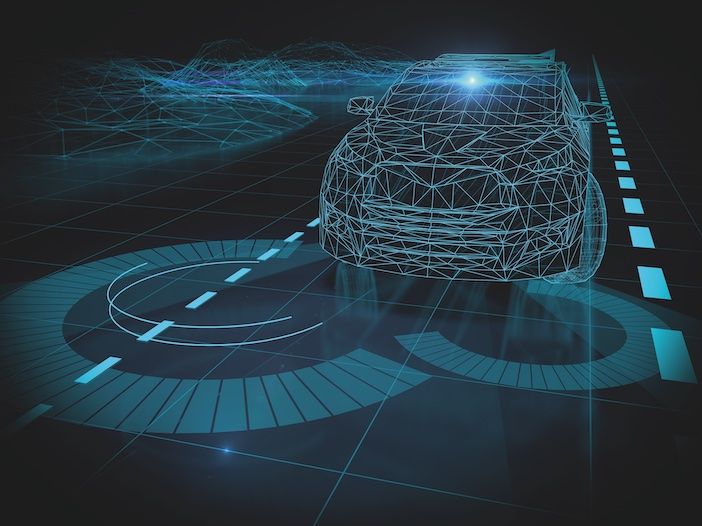
The 6G network’s ability to sense its environment, its all-pervasive nature, and the extent to which safety-critical technology depends on it, brings obvious concerns surrounding privacy and security. Blockchain could play an important role in both cases, allowing access only to those who have the necessary digital key.
“There are two angles to it, as it interacts with 6G it allows us to have more secure network and better privacy. And that’s why it’s useful for vehicular networks, because a lot of the information that gets out of vehicle needs to be private, right?” Says Saad.
Currently, the data coming from connected vehicles is anonymized in the EU. However, giving the end-user effective control over who has access to their data goes one better.
What’s next?
AI assisted 6G is not the final stage for communication. Saad and his colleagues are working on Quantum Networks, which may one day allow for instantaneous communication regardless of distance.
But in the next decade, at least, 6G is likely to be the big news, with full commercialization expected over the next six years. “The convergence of AI in 6G, along with the twin technology will help us create this massive, reliable, pervasive connectivity. You will have intelligent agents including AI driven vehicles, along with your mind potentially connected to the network,” says Saad.
The rollout will be in a series of stages, with intermediate deployment of 5G-Advanced. There is also significant work to be done regarding standardization of 6G.
“We expect 6G to launch commercially by 2030,” predicts Vetter “Standardization phase 1 will likely start from 2025, leading to the first 6G specification in 3GPP Release 21 by 2028. It will then be followed by commercial deployments around 2030.”
Read the full version of this feature in the December 2023 edition of TTi magazine