

Ringway is leading a groundbreaking UK industry partnership with Colas, Fusion Processing, and TRL to explore the feasibility of Autonomous Impact Protection Vehicles (AIPVs) designed to improve roadworker safety on the nation’s strategic road network.
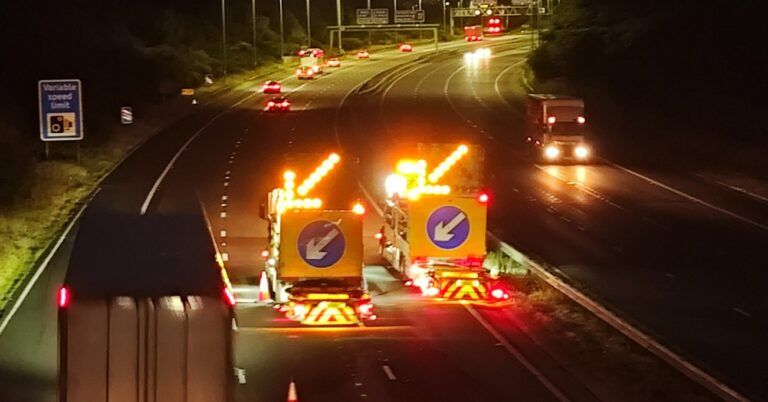
The study, backed by the UK Government’s £150m Connected and Automated Mobility (CAM) Pathfinder program, seeks to automate the operation of Impact Protection Vehicles (IPVs). IPVs play a critical role in shielding road crews on motorways and high-speed roads by protecting them from collisions with other traffic during short-term works and when setting up traffic management for closures.
Currently, around 1,500 traditional IPVs are active across the UK. Despite high-visibility markings, illuminated signs, and energy-absorbing crash cushions, collisions remain a frequent threat. Over the past six years, 115 collisions involving IPVs have been reported, all while drivers were in the vehicle. These incidents have caused significant physical injuries and psychological trauma, including cases of long-term Post-Traumatic Stress Disorder (PTSD).
The autonomous vehicles under study aim to eliminate these risks by removing the driver from the vehicle during specific scenarios, enhancing safety for road workers. If the feasibility study proves successful, it could lead to the adoption of homegrown UK technology and expertise, with potential commercial growth extending into connected and automated vehicle sectors both domestically and internationally.
Alexandra Harrison, innovation project manager at Ringway, will present the concept at Highways UK on October 16 in the Local Authority Theatre, highlighting the project’s potential impact.
Funded through the CAM Pathfinder program by the UK Government’s Centre for Connected and Automated Vehicles (CCAV), this initiative builds on previous research to push the UK toward becoming a global leader in roadworker safety technology. The study aims to confirm whether autonomous IPVs can effectively reduce risk and prevent harm on the UK’s roads, marking a significant step forward in protecting those who maintain vital transport infrastructure.