

Traffic Technology TodayTraffic Technology Today
  • News
    • A-D
      • Appointments & Staffing
      • Asset Management
      • Autonomous Vehicles & ADAS
      • Awards
      • Cloud Computing
      • Congestion Reduction
      • Connected Vehicles
      • Covid-19
      • Cybersecurity
      • Data & Modeling
      • Deals, Acquisitions & Mergers
    • E-J
      • Electric vehicles & infrastructure
      • Emissions & Low Emission Zones
      • Enforcement
      • Event News
      • Funding
      • Incident Detection
      • Infrastructure
      • Intersections & Traffic Signals
      • ITS
    • K-S
      • Legal / Government Regulation
      • Machine Vision / ALPR
      • Mapping
      • Mobility as a Service
      • Multimodality & Micromobility
      • Planning, Testing, R&D
      • Public transit
      • Safety
      • Smart Cities
      • Smart Parking
    • T-Z
      • Tolling
      • Traffic counting & categorization
      • Traffic Management
      • Traveler Information Systems
      • Tunnels & Bridges
      • Variable Message Signs
      • Vulnerable Road Users
      • Weather systems
  • Features
    • Features
    • Opinion
  • Online Magazines
    • November / December 2025
    • August 2025
    • May 2025
    • March 2025
    • December 2024
    • September 2024
    • Archive Issues
    • Subscribe Free!
    • > Tolltrans
  • Video & Audio
    • Video
    • Audio
  • Podcast
  • Events
  • Webinars
  • Technology Profiles
LinkedIn YouTube X (Twitter)
Subscribe >
Traffic Technology TodayTraffic Technology Today
  • News
      • Appointments & Staffing
      • Asset Management
      • Autonomous Vehicles & ADAS
      • Awards
      • Cloud Computing
      • Congestion Reduction
      • Connected Vehicles
      • Cybersecurity
      • Data & Modeling
      • Work zones
      • Deals, Acquisitions & Mergers
      • Electric vehicles & infrastructure
      • Emissions & Low Emission Zones
      • Enforcement
      • Event News
      • Funding
      • Incident Detection
      • Infrastructure
      • Intersections & Traffic Signals
      • ITS
      • Legal / Government Regulation
      • Machine Vision / ALPR
      • Mobility as a Service
      • Multimodality & Micromobility
      • Planning, Testing, R&D
      • Public transit
      • Safety
      • Smart Cities
      • Artificial Intelligence (AI)
      • Smart Parking
      • Tolling
      • Traffic counting & categorization
      • Traffic Management
      • Traveler Information Systems
      • Tunnels & Bridges
      • Variable Message Signs
      • Vulnerable Road Users
      • Weather systems
  • Features
    • Features
    • Opinion
  • Online Magazines
    1. November / December 2025
    2. August 2025
    3. May 2025
    4. March 2025
    5. December 2024
    6. September 2024
    7. Archive Issues
    8. Subscribe Free!
    9. > Tolltrans
    Featured
    November 30, 2025

    NEW ISSUE: Read the November/December 2025 edition of TTi magazine online now!

    ITS By Tom Stone
    Recent

    NEW ISSUE: Read the November/December 2025 edition of TTi magazine online now!

    November 30, 2025

    Read the new TTi digital magazine online now – August 2025

    August 8, 2025
    New issue graphic

    Read the new TTi digital magazine online now – May 2025

    May 7, 2025
  • Video & Audio
    • Video
    • Audio
  • Podcast
  • Events
  • Webinars
  • Technology Profiles
LinkedIn YouTube X (Twitter)
Traffic Technology TodayTraffic Technology Today
Congestion Reduction

Korean researchers develop new algorithm for traffic signal control

Lauren DysonBy Lauren DysonNovember 22, 20223 Mins Read
Share LinkedIn Twitter Facebook Email

A team of researchers from Chung Ang University in Korea led by Professor Keemin Sohn has proposed a meta-RL model for traffic-signal control. Specifically, the team developed an extended deep Q-network (EDQN)-incorporated context-based meta-RL model for traffic signal control.

Traditional traffic signal controllers are often not capable of handling traffic congestion. Existing systems rely on a theory- or rule-based controller in charge of altering the traffic lights based on traffic conditions. The objective is to reduce vehicle delay during normal traffic conditions and maximize vehicle throughput during congestion. However, traditional traffic signal controllers cannot fulfil such altering objectives, and a human controller can only manage a few intersections.

Reinforcement learning (RL) can potentially solve this problem, however, RL usually works in a stationary environment, and traffic environments are not stationary.

“Existing studies have devised meta-RL algorithms based on intersection geometry, traffic signal phases, or traffic conditions,” explains Sohn. “The present research deals with the non-stationary aspect of signal control according to the congestion levels. The meta-RL works autonomously in detecting traffic states, classifying traffic regimes, and assigning signal phases.”

The model works as follows. It determines the traffic regime – saturated or unsaturated – by utilizing a latent variable that indicates the overall environmental condition. Based on traffic flow, the model either maximizes throughput or minimizes delays, similar to a human controller. It does so by implementing traffic signal phases (action). As with intelligent learning agents, the action is controlled by the provision of a ‘reward’. Here, the reward function is set to be +1 or -1 corresponding to a better or worse performance in handling traffic relative to the previous interval, respectively. Further, the EDQN acts as a decoder to jointly control traffic signals for multiple intersections.

Following its theoretical development, the researchers trained and tested their meta-RL algorithm using Vissim v21.0, a commercial traffic simulator, to mimic real-world traffic conditions. Further, a transportation network in southwest Seoul consisting of 15 intersections was chosen as a real-world testbed. Following meta-training, the model could adapt to new tasks during meta-testing without adjusting its parameters.

The simulation experiments revealed that the proposed model could switch control tasks (via transitions) without any explicit traffic information. It could also differentiate between rewards according to the saturation level of traffic conditions. Further, the EDQN-based meta-RL model outperformed the existing algorithms for traffic signal control and could be extended to tasks with different transitions and rewards.

Nevertheless, the researchers pointed to the need for an even more precise algorithm to consider different saturation levels from intersection to intersection.

“Existing research has employed reinforcement learning for traffic signal control with a single fixed objective,” says Sohn. “In contrast, this work has devised a controller that can autonomously select the optimal target based on the latest traffic condition. The framework, if adopted by traffic signal control agencies, could yield travel benefits that have never been experienced before.”

Share. Twitter LinkedIn Facebook Email
Previous ArticleNew platform for maps, location and navigation services is launched
Next Article UK trial suggests public smart charging could save EV drivers over £600 a year
Lauren Dyson

Lauren is a regular contributor to Traffic Technology International (TTi) and a freelance technical journalist. Over the past 15 years, she has worked on a wide variety of B2B publications and websites, including a stint as deputy editor of Traffic Technology International from 2014-2016. She has a degree in English from the University of Exeter. Lauren is mum to two busy little girls. She is always in demand!

Related Posts

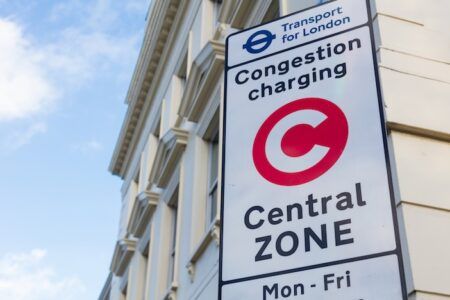
Congestion Charge signage on Millbank, London
Congestion Reduction

London Congestion Charge rise aims to tackle traffic levels, but creates controversy

November 13, 20253 Mins Read
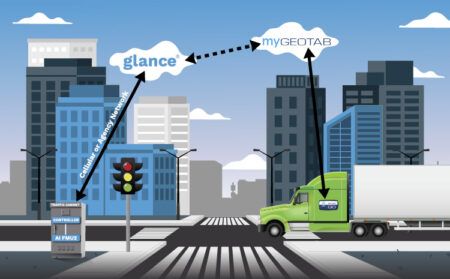
An illustration showing how the Glance and Geotab solution will work
Intersections & Traffic Signals

New partnership reduces freight corridor travel times

November 5, 20252 Mins Read
Intersections & Traffic Signals

Q-Free publishes secure API documentation for Dynamic Signals

November 4, 20253 Mins Read
Latest Posts
Futuristic drone delivering emergency medical supplies in a disaster-stricken urban area with collapsed buildings and smoke.

Coventry University to research drone deliveries for disaster zones

December 4, 2025
Young man white man with short brown beard and short brown hair in suit and tie standing in front of the union jack

UK launches consultation on automated vehicle regulatory framework

December 4, 2025
Australian flag flying over a busy city street

Finalists announced for the 16th ITS Australia Awards

December 4, 2025
FREE WEEKLY NEWS EMAIL!

Get the ‘best of the week’ from TrafficTechnologyToday.com direct to your inbox every Thursday


Supplier Spotlights
  • Conduent Transportation
    Conduent Transportation
  • Norbit ASA
    Norbit ASA
  • Teconer Oy Finland
    Teconer Oy
  • MESSAGEMAKER DISPLAYS
  • Carrida Technologies GmbH
    CARRIDA Technologies GmbH
  • triple sign system AB
    Triple Sign System AB
  • Cross Zlin
    CROSS Zlín a.s.
  • SMATS traffic solutions logo
    SMATS Traffic Solutions Inc.
  • Star Systems International Limited
Our Social Channels
  • Twitter
  • YouTube
  • LinkedIn
Getting in Touch
  • Free Email Newsletters
  • Contact Us
  • About Us
  • Supplier Spotlight

Upcoming Events

Mar 10
10th March 2026 - 13th March 2026

Intertraffic Amsterdam 2026

View Calendar
© 2025 Mark Allen Group Ltd | All Rights Reserved
  • Cookie Policy
  • Privacy Policy
  • Terms & Conditions

Type above and press Enter to search. Press Esc to cancel.